Following the Tour de France Femmes across the Channel, by sail
On Monday 2 August 2027, the Tour de France Femmes comes back to France after three days in Britain and races along our coast. The stage runs 123 km from Le Touquet to Calais, and the finale climbs the cliffs of Cap Gris-Nez and Cap Blanc-Nez, a short ride up the coast from our marina in Boulogne-sur-Mer. If you're coming from England with your bike, the Channel becomes part of the trip.
The 2027 route, from Leeds to the Puy de Dôme
For the first time, the women's Tour starts in Britain. The riders leave Leeds on Friday 30 July, race from Manchester to Sheffield the next day over Winnats Pass and Snake Pass, and finish their British visit on Sunday 1 August with a team time trial through central London, the first team time trial in the race's history. Then the whole race transfers to France.
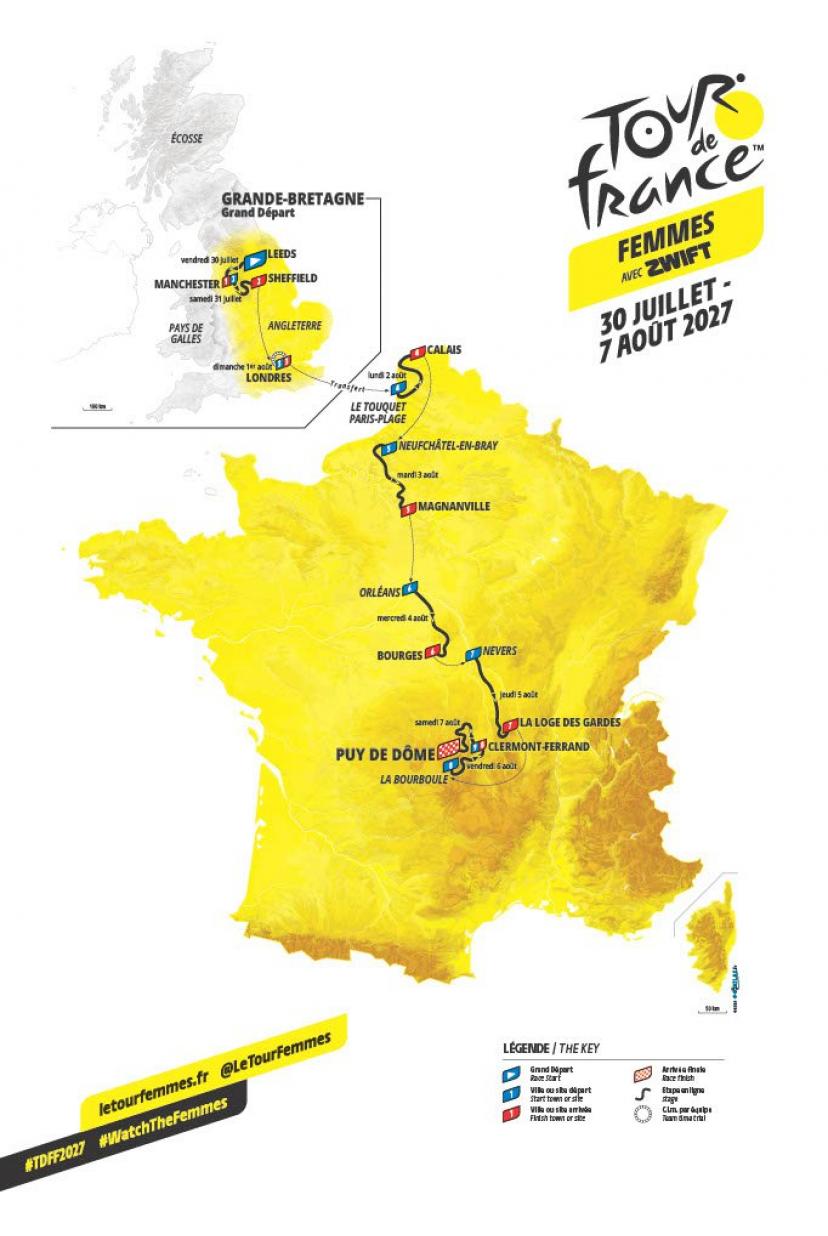
Stage 4 is the first French stage, and it belongs to the Côte d'Opale. It is also the first time the Tour de France Femmes stops in the Pas-de-Calais, and the first women's stage finish in Calais, five years after the men's Tour finished there in 2022. From the coast, the race heads south through Normandy and the Loire to the Auvergne, and ends on the summit of the Puy de Dôme on Saturday 7 August.
- Fri 30 JulyStage 1, Leeds to Manchester
- Sat 31 JulyStage 2, Manchester to Sheffield
- Sun 1 AugustStage 3, team time trial in London
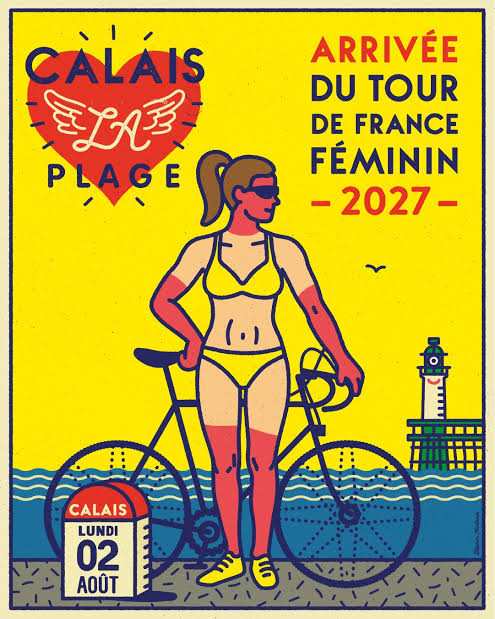
- Mon 2 AugustStage 4, Le Touquet-Paris-Plage to Calais, 123 km, start 2pm
- Tue 3 to Sat 7 AugustStages 5 to 9, from Neufchâtel-en-Bray to the finish on the Puy de Dôme
Stage 4, Le Touquet to Calais
The start is set for 2pm in Le Touquet-Paris-Plage. The route heads inland over the cobbles of Montreuil-sur-Mer, then through Hucqueliers, Licques and Marquise, in the hills behind Boulogne. It meets the sea at Wissant and runs along the coast for the finale, over the two capes. The climb of Cap Blanc-Nez comes 12 km from the line, the same climb where Wout van Aert launched his winning attack in the men's Tour in 2022.
So the race skips Boulogne town and passes through the countryside just behind it, and the decisive part happens on the coast just north of our marina. The organisers will publish the detailed stage maps later, and we'll update this page when they do.
Getting there from Dover, with your bike
SailLink is the first scheduled passenger sail ferry across the Channel, from Dover marina to Boulogne-sur-Mer marina, centre town to centre town. There are 12 passengers and 12 bikes per crossing, and the bikes travel inside the boat, out of the salt and the spray.
Come to the marina an hour before departure. That gives you time to settle in, have your passport checked, get your life jacket on and listen to the briefing. Panniers are fine, you take them off so we can lift the bike aboard, and you can bring whatever you can carry. Electric bikes are welcome. If yours is a cargo bike, a tandem or anything out of the ordinary, write to us before booking and we'll tell you what's possible.
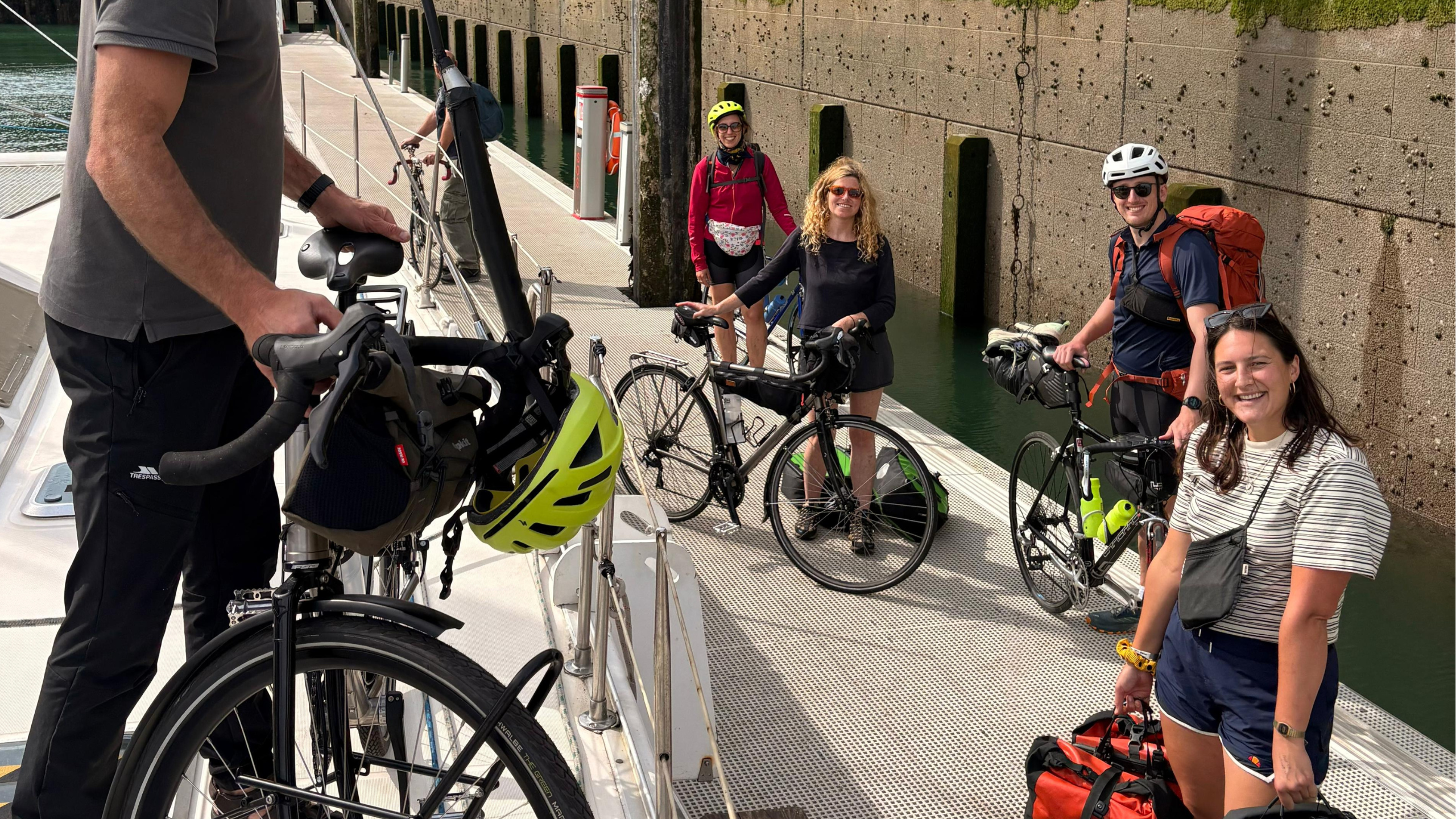
A crossing takes about four and a half hours on average. Our fastest so far took 2 hours 18 minutes, on a day the wind was right behind us. Departure times follow the tides, so they change from one day to the next.
When you arrive in Boulogne, the border police check passports at the marina. Sometimes they're already waiting, sometimes we wait for them a little, and it takes ten minutes at most, since passenger details are sent to the authorities ahead of the crossing. Then you take your bike off, walk up the pontoon, and you're on the Vélomaritime.
To me, that's what makes this trip special. You come to see a one-off event, on a crossing set up for people travelling with bikes, and the adventure carries on over the water. The cycling spirit, prolonged at sea.
"Crossing the Channel became something to be treasured, rather than a necessary evil."
A passenger, September 2026
Getting to Dover from London
The high speed train from London St Pancras reaches Dover Priory in just over an hour, and the station is five minutes by bike from the marina (twenty on foot). Southeastern takes regular bikes on all off-peak trains, which includes the whole weekend, but space is limited and staff can refuse a bike on a very busy train. On a Tour weekend, travel early. You can check their cycle policy here.
If you'd rather ride all the way, National Cycle Network Route 1 links London and Dover via Canterbury, the town where the 2007 Tour finished its first stage from London. From the Thames it runs through Rochester and the Kent countryside to Canterbury, then 27 km on to the marina gate in Dover. Count two days at a touring pace. Our NCN1 route guide covers it stage by stage, and if you want to keep riding after the stage, our London to Paris route carries on down the Côte d'Opale.
From the marina to the capes
Leaving Boulogne marina, the Vélomaritime (EuroVelo 4) climbs north along the coast through Wimereux and its Belle Époque villas, Ambleteuse and its Vauban fort, the fishermen's houses of Audresselles, then Audinghen and Cap Gris-Nez, the closest point in France to England. The Vélomaritime suggests a Boulogne, Cap Gris-Nez, Wissant ride of 32 km. Wissant is exactly where the race reaches the sea.
On race day, the roads on the route close to traffic well before the riders come through, and the part of the coast road shared with the stage won't be rideable once it's closed. Get to your spot early, on the capes or along the road above Wissant Bay, and settle in for the publicity caravan and the riders.
Before you set off, have a coffee at Café Proqua, a few minutes from the marina. On the way up, Biscuiterie Sophie in Wimereux is worth a stop. If you arrive the day before, Monsieur Georges in Boulogne is a good place to spend the night. All three are partners of ours, and Proqua and Monsieur Georges both come up regularly in our passengers' feedback.
Come a day or two early
We sail with the wind and the tides, and that's the adventure. So our advice for any event is the same: plan ahead, cross early, and avoid crossing on the day itself or the day before. The weather can always change its mind. For the Côte d'Opale stage, crossing on Friday 30 or Saturday 31 July gives you a weekend on the coast and a relaxed Monday.
If you want to see the London time trial on Sunday and the Calais stage on Monday, you'd be crossing on Sunday evening, the day before. It can work, but go in with a plan B. Most of our passengers make a stay of it anyway: 71 of the 72 who answered our post-crossing survey this year spent at least one night on the other side.
When the forecast doesn't allow a crossing, we don't sail. You then get a place on the next available departure, or on an extra departure if the calendar allows it. If that doesn't work for you, you can take a voucher or a full refund and cross another way. Most people go via Calais: P&O takes foot passengers on certain sailings, booked online in advance, and DFDS takes cyclists.
It happened this summer to a group of five Dutch cyclists. They left Boulogne in the rain on five completely mismatched bikes and arrived in Dover in sunshine. Their return crossing was called off for strong winds, so they went back by ferry.
The Tour has been here before
Dover and Boulogne are both already in the Tour's history books. In July 1994, the Tour finished a stage in Boulogne-sur-Mer, won by Jean-Paul van Poppel, then crossed to England through the brand new Channel Tunnel and started a stage from Dover to Brighton, won by Francisco Cabello after a breakaway of more than 180 km. Our two ports, linked by the race the year the tunnel opened.
The Tour came back to Kent in 2007, from London to Canterbury, in Mark Cavendish's first Tour de France.
Boulogne-sur-Mer and the Tour de France 2025
Boulogne's most recent date with the Tour was in July 2025, when stage 2 of the men's race finished in town after setting off from Lauwin-Planque. The finale was made for punchy riders: selective climbs through Saint-Étienne-au-Mont and Outreau, then up through the town via the Grande Rue and the rue de la Lampe, to a finish on the boulevard Mariette. Mathieu van der Poel won it and took the yellow jersey that evening. It was the fifth stage finish in Boulogne's history, after 1949, 1994, 2001 (Erik Zabel) and 2012 (Peter Sagan).
So in two years, the coast around our marina will have hosted the men's Tour in town and the women's Tour on the capes. On the women's side, the first women's Tour de France, in 1955, was won by a British rider, Millie Robinson. In 2027 the women's race starts in her country and crosses to the Côte d'Opale.
Questions we often get
Does the 2027 Tour de France Femmes go through Boulogne-sur-Mer?
Not through the town. Stage 4 goes inland through the hills behind Boulogne (Licques, Marquise) and reaches the coast at Wissant, 32 km north of our marina on the Vélomaritime.
When did the Tour de France last come to Boulogne-sur-Mer?
In July 2025. Stage 2 of the men's Tour, from Lauwin-Planque, finished on the boulevard Mariette in Boulogne, won by Mathieu van der Poel, who took the yellow jersey.
How long is the crossing from Dover to Boulogne?
About four and a half hours on average, sometimes much less. Departure times follow the tides.
Can I bring my e-bike?
Yes. Electric bikes are welcome, with up to 12 bikes per crossing. For cargo bikes and tandems, contact us before booking.
When can I book for summer 2027?
Bookings open this winter, most likely towards the end of 2026. Newsletter subscribers get the new dates by email 48 hours before we announce them publicly, so they can pick their crossing first.
Pick your 2027 crossing first
Newsletter subscribers get our 2027 dates 48 hours before everyone else.