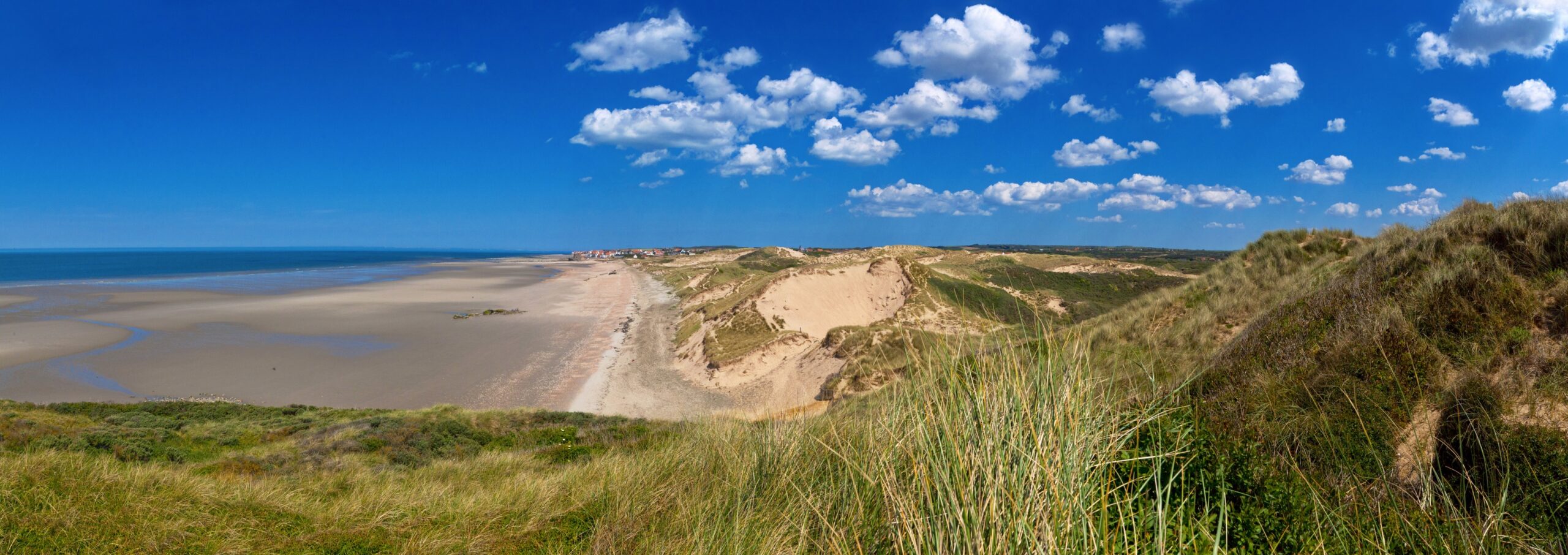
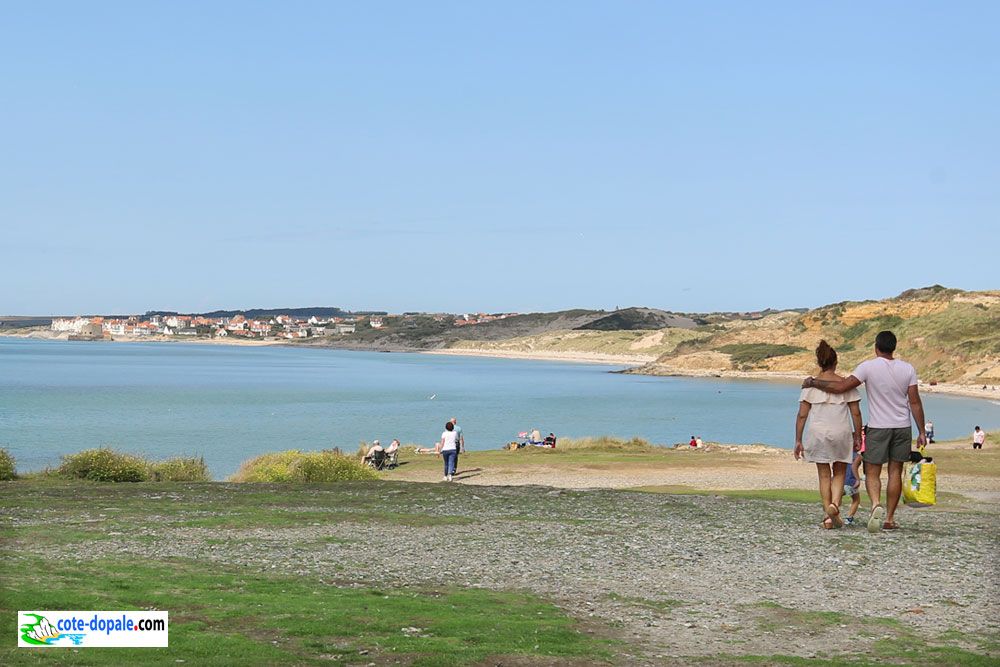
Dunes de la Slack
Total immersion in the regional nature park. Wild dunes and pine forests with striking contrasts between golden sand and vegetation. The perfect walk to clear your head after the crossing.
Open on Komoot"A city that smells of the sea before you even arrive. Medieval ramparts, wild cliffs, and a fish market France is proud of."
"You don't pass through Boulogne. You arrive, you settle, and the city does the rest."
Boulogne-sur-Mer is 2,000 years of continuous maritime history that has never stopped being alive. A fortified upper town perched on its hill, ramparts you walk in the morning, the familiar bustle of the Place Dalton market, the smell of fresh fish on Quai Gambetta before the light has fully risen. A city that has never needed reinventing to remain itself.
Here, the sea is not a backdrop. It is the trade. It has shaped the streets, the names, the dialects, the gestures. It dictates what you eat at noon, what you talk about in the evening, and the way you inhabit the city. The people of Boulogne never turned their backs on their port to please tourists. They kept it at the centre, because that is where they come from.
You arrive by sailing ferry from Dover. You step down onto the pontoon. You are already inside. The upper town is twenty minutes on foot, the market ten, Les Aubettes five. No industrial zone to cross, no shuttle, no queue. The crossing continues into the city, and the city continues into the crossing. That is Boulogne by sailing boat.

SailLink runs the sailing ferry from Dover to Boulogne-sur-Mer, marina to marina. And Boulogne is not a transit stop. It is a city with 2,000 years of continuous maritime history, a perfectly preserved medieval upper town encircled by ramparts you can walk in an hour, and some of the most dramatic coastal scenery in northern Europe within minutes of the marina.
It is also France's largest fishing port. Every morning, Les Aubettes on Quai Gambetta overflow with the day's catch, sold directly by fishermen's families. The restaurants here have nothing to import.
SailLink passengers arrive directly at the marina, a short walk from the harbour front. The upper town sits at the top of the hill, twenty minutes on foot. It has to be earned, and it is worth every step.
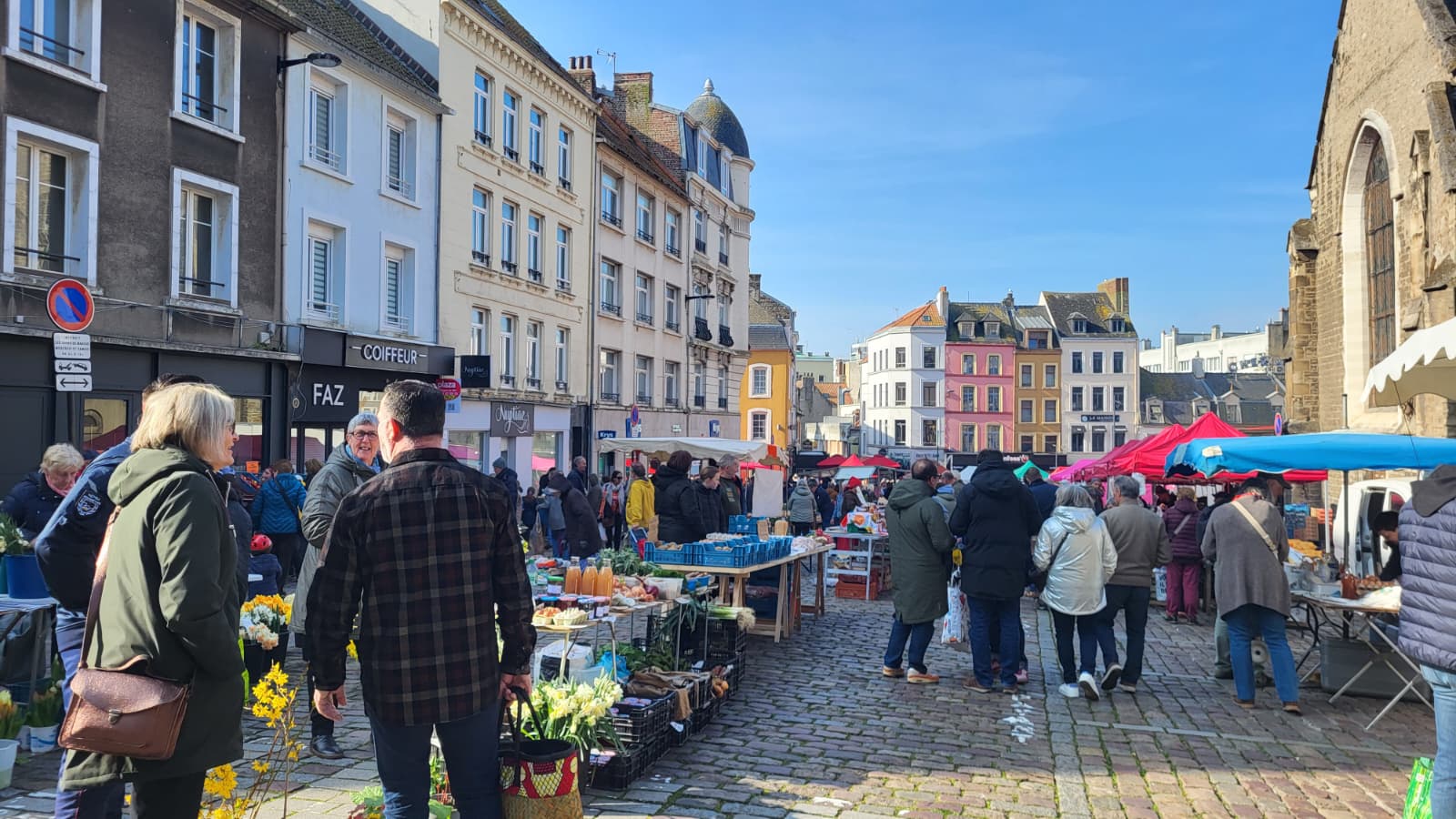
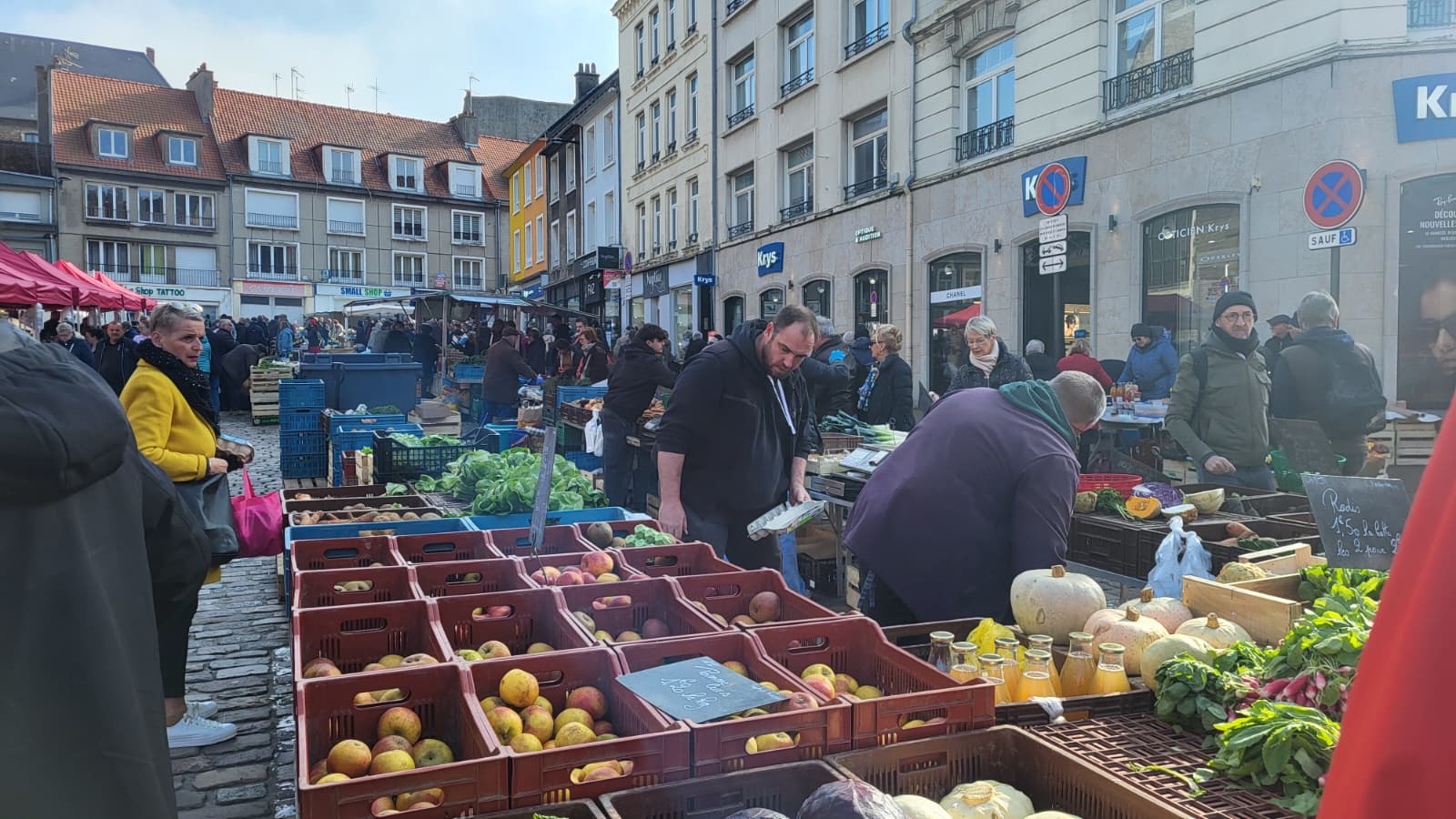
Place Dalton Market © Joris G. SailLink
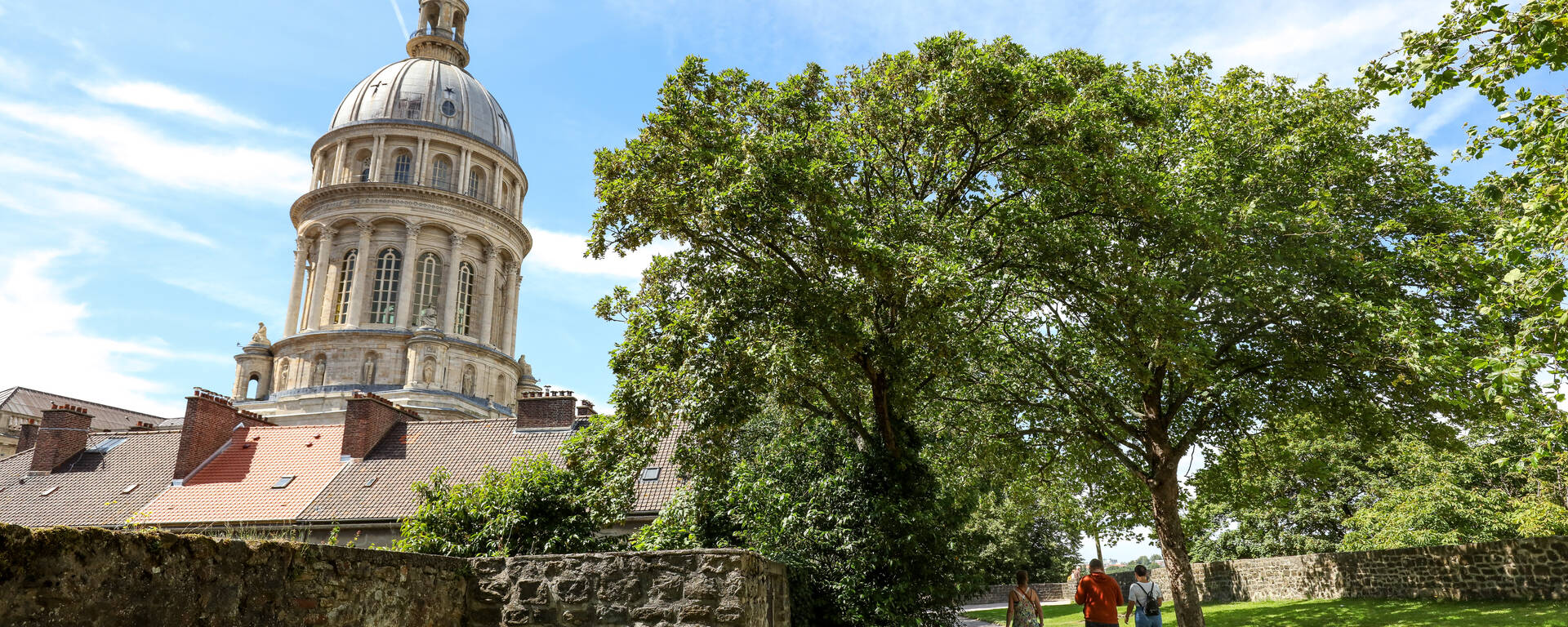
Upper Town Ramparts © P. Ledez / OTBCO
Dunes de la Slack © Eden 62
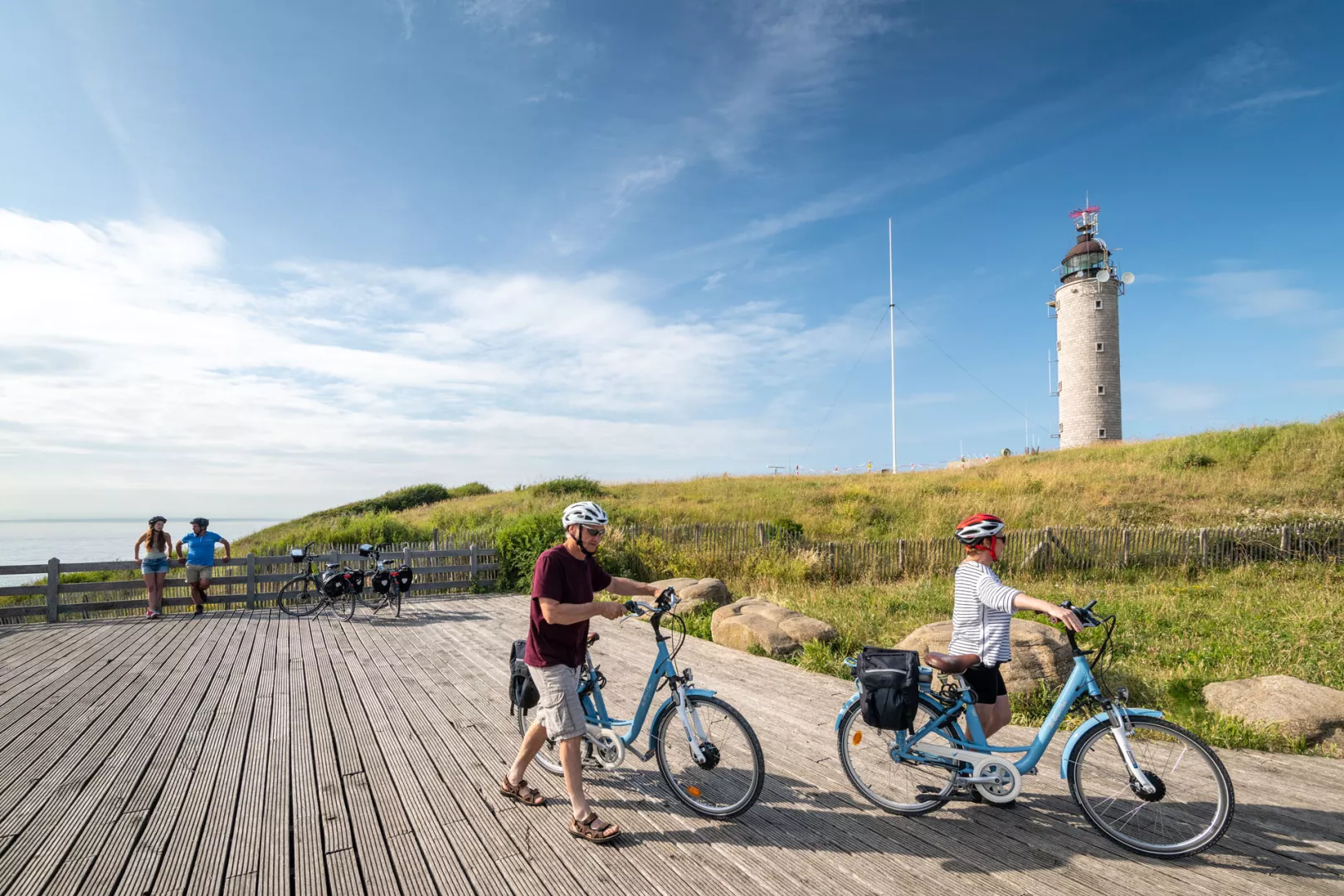
Les Deux-Caps © La Vélomaritime
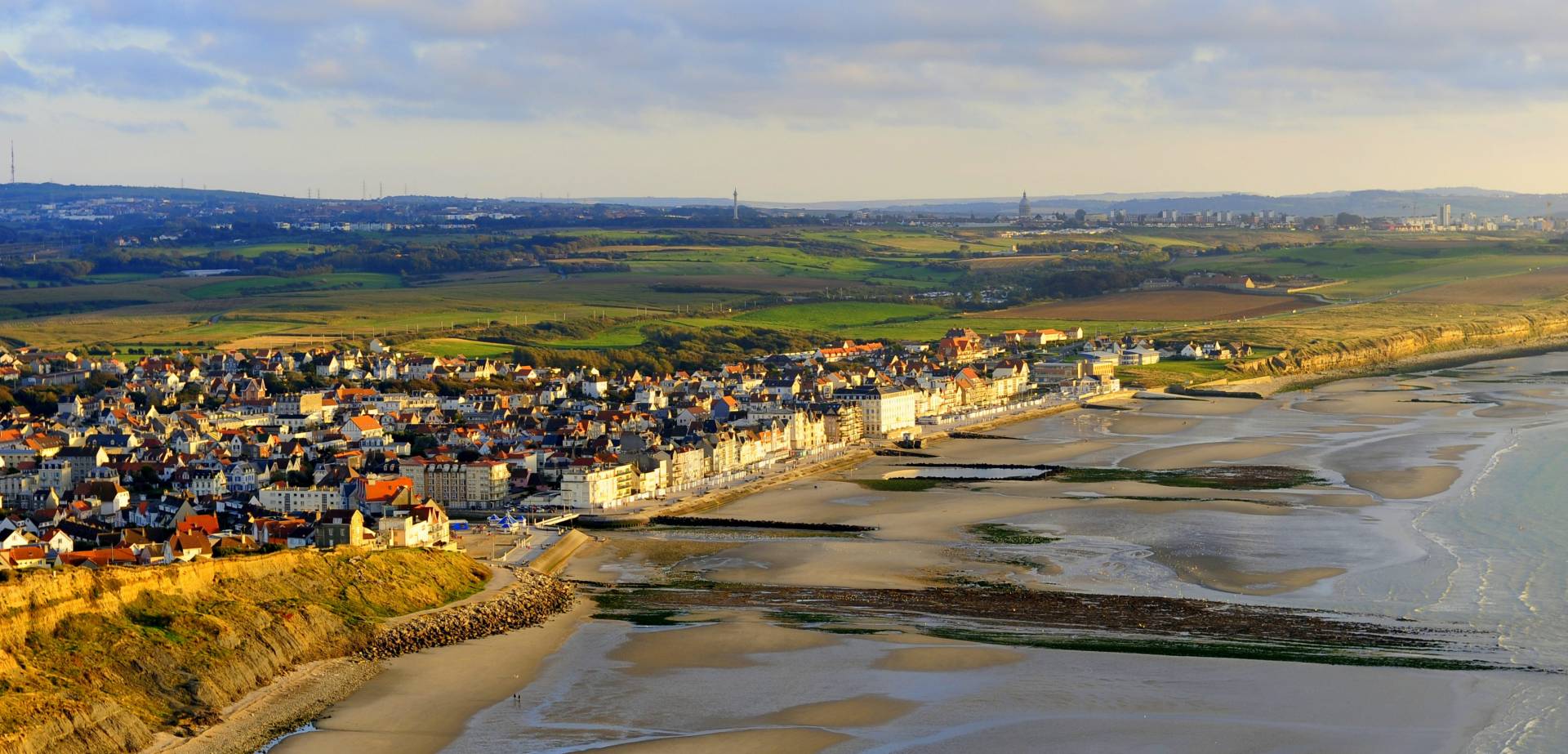
Wimereux © Ville de Wimereux
The two giants of the Beurière, living memory of the fishermen's quarter. In Boulogne, history is not recounted, it is carried through the streets.
Batisse, the sailor, in his fisherman's smock and red cap, and Zabelle, the fishwife in her petticoats and cotton scarf: these are the emblematic figures of la Beurière, the old fishermen's quarter clinging to the hillside above the port. They come out on feast days, carried aloft through the streets, greeted as ancestors who have never been forgotten.
Behind the costumes, an entire maritime community marches past: generations of fishing families who put to sea, the women who stayed ashore to sell the catch, mend the nets, wait. The matelotes of the Beurière had their own dialect, their own songs, their own way of tying their scarves. All of this survives through Batisse and Zabelle, and through the ducasses that still mark the Boulogne calendar.
Here, folklore is not a performance for visitors. It is a faithfulness. A way of saying: we have not forgotten where we come from.
Clinging to the flanks of the upper town, above the port, this is where people long lived, ate, prayed, and waited for the boats to return. La Maison de la Beurière, kept intact since 1870, tells that daily life better than any museum.
Not quite French, not quite Picard, and punctuated with words from the sea. Une matelote, un cabaillot, un berck. If you listen carefully at the Place Dalton market or at Les Aubettes, you will still hear it.
In Boulogne, the sea is still celebrated. Processions of Saint-Pierre, the giants' outing, the blessing of the boats: the city gives thanks for what keeps it alive. If you happen upon a ducasse, follow it. It is the best way to understand Boulogne.
Wild dunes, Napoleonic trails, cliff cycling and medieval ramparts
Total immersion in the regional nature park. Wild dunes and pine forests with striking contrasts between golden sand and vegetation. The perfect walk to clear your head after the crossing.
Open on Komoot
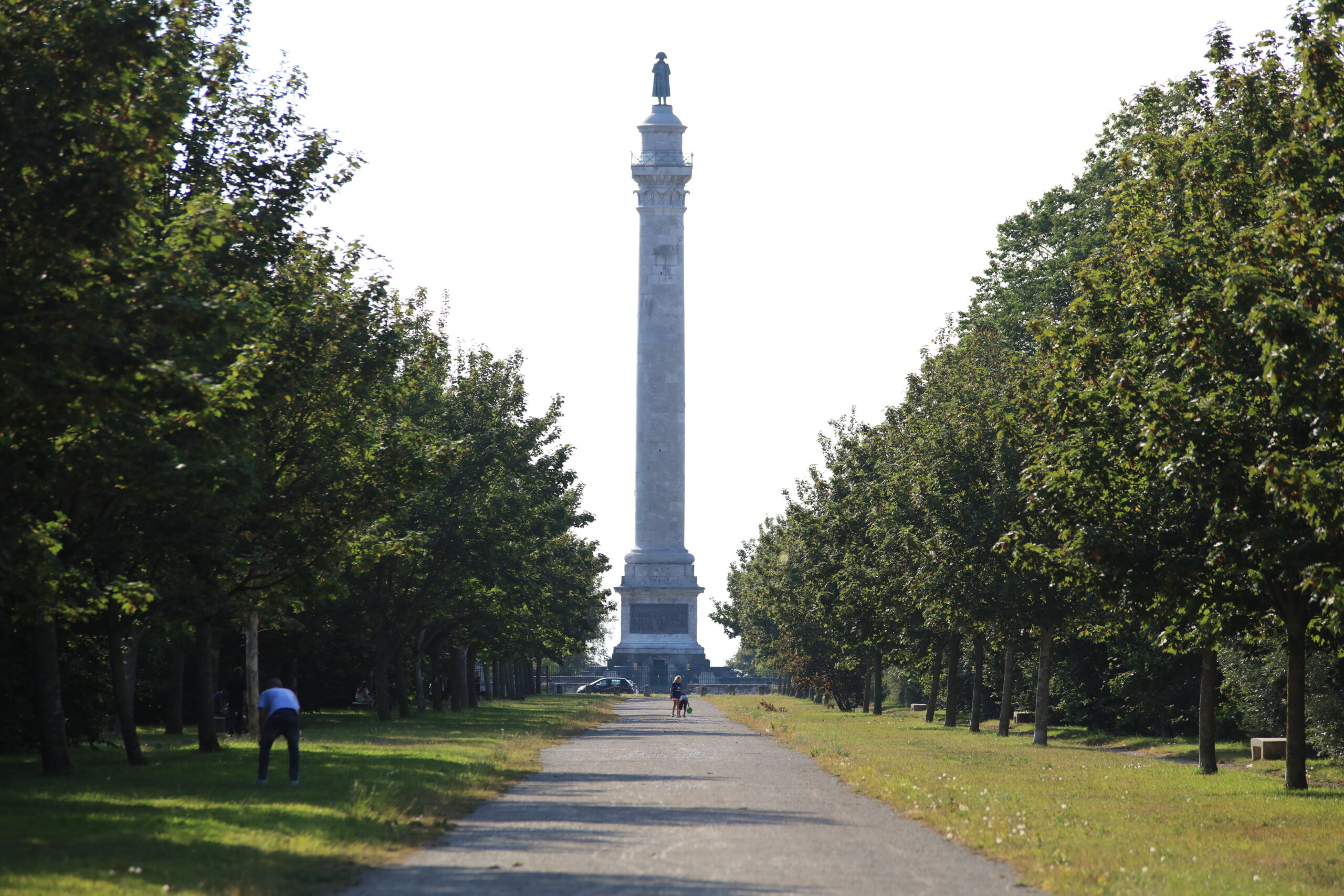
In the footsteps of Napoleon's Grande Armée. A historical circuit around Wimille with panoramas over the Column and the Boulonnais countryside — sunken lanes and sweeping views over the Channel.
See the guide
The iconic coastal route from Boulogne to Calais. Follow the Deux-Caps cliffs on the EV4, Cap Blanc-Nez with England visible on the horizon. The quintessential Côte d'Opale cycling ride.
Vélomaritime guideNotre-Dame de Boulogne and one of the largest crypts in France — an impressive underground labyrinth beneath the upper town basilica.
Practical info Maritime heritage · Fishermen's quarterLa Beurière was Boulogne's fishermen's quarter. This 1870 house preserves intact the everyday life of a fishing family: furniture, linen, nets. A quiet and moving portrait of the community that built this port — the world of Batisse and Zabelle.
Practical info Culture · ChâteauWithin the medieval ramparts: Egyptian collections and local maritime history in the 13th-century comtal castle. An underrated treasure.
Practical info History · Second World WarA coastal fort commanding the sea, a striking witness to the Channel's Second World War defences, with fascinating guided tours.
Visit the site Remembrance · Franco-British historyOn the hillside above Wimereux, facing the Channel: more than 4,000 Commonwealth soldiers buried within sight of the English coast. A profoundly moving place, a reminder of the enduring closeness between these two shores.
CWGC info Nature · Grand Site de FranceThe starting point for exploring Cap Blanc-Nez and Cap Gris-Nez. Bike hire, walking routes and an interactive exhibition on this protected coastal landscape. A key stop on the Vélomaritime.
Plan your visit"An invigorating and refreshing way to travel. Crossing the Channel under sail, following the rhythm of the waves and watching the wildlife, is simply unforgettable."
Anna H., passenger 2025France's largest fishing port. The freshest table in the north.
Fishermen sell directly from their catch, whatever the season, whatever the tide brought in that morning. Alongside them: cheesemongers, market gardeners, bakers, charcutiers. No tourist performance. Just the city feeding itself. If you can plan your crossing around a Wednesday or Saturday morning, do it.
© Joris G. SailLink
On the quay, two minutes from the pontoon.
No terminal. No car deck. No queue. SailLink is a 12-passenger sailing catamaran that departs from Dover Marina and arrives directly in Boulogne harbour, a few minutes' walk from the upper town, the restaurants, the trails.
"I absolutely loved my crossing. It was a privilege to be part of such a welcoming community. A unique and wonderful experience."
Toby S., passenger 2025"A more sustainable world is already being built. SailLink is one of those rare projects that make it real."
Mike G., crossing 2025