
Bound for Sussex.
A pilot phase to open the middle of the Channel to sail.
A one-off trial, to show that a Normandy to Sussex sailing link can exist. This is not your usual ferry ride. It is a full day at sea: around eight hours under sail aboard Mer Agitée, the racing catamaran of Michel Desjoyeaux, double Vendée Globe winner, twelve passengers, from one sailors' port to another. The crossing is the journey, not the bit in between.
Tickets on sale Saturday 1 August. Limited places, the first step towards a new sailing corridor.
From Boulogne to Fécamp.
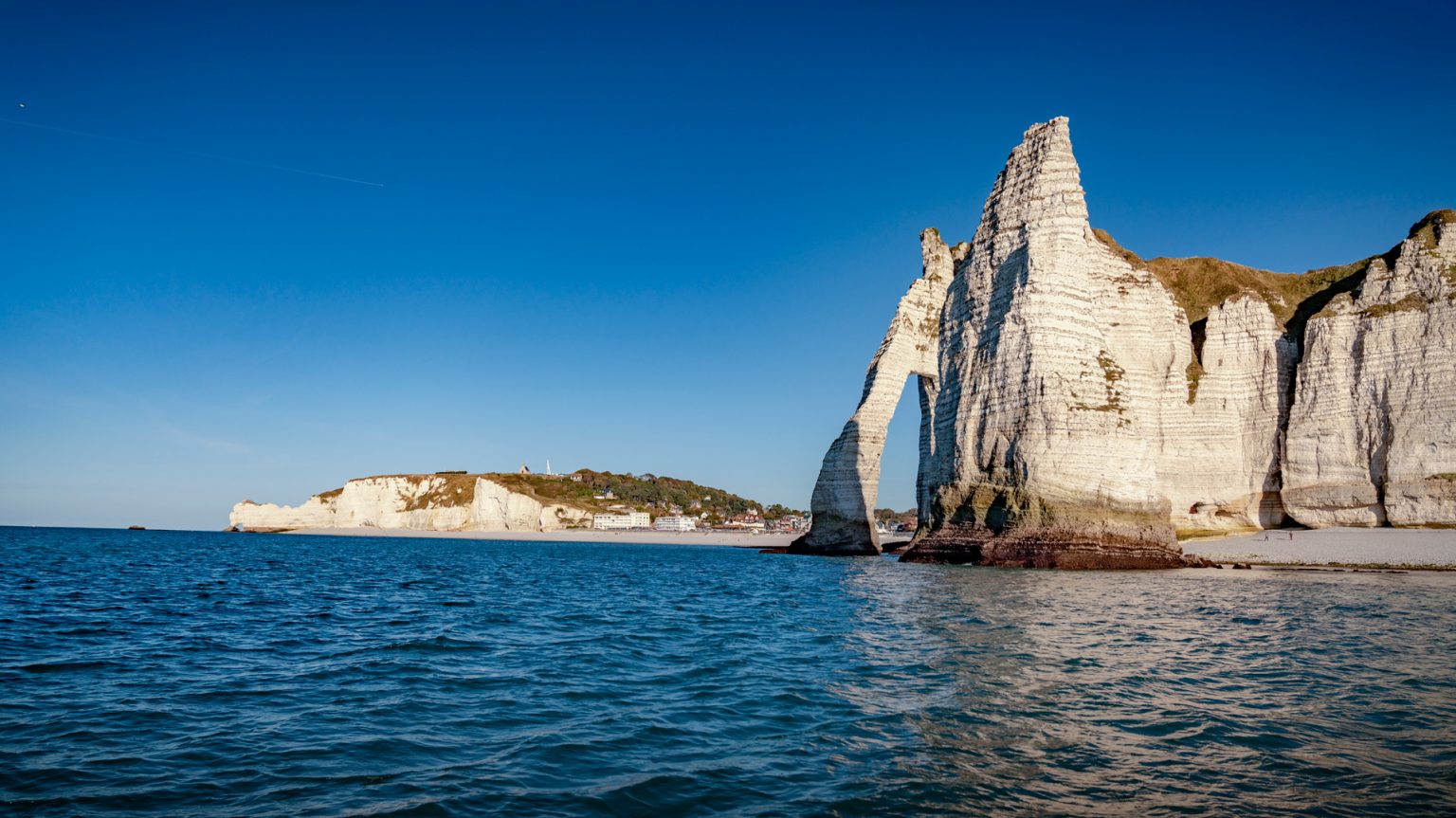
SailLink runs the first sailing ferry link between Dover and Boulogne-sur-Mer: a 2025 season completed, a 2026 season under way, and one simple idea proven, that a Channel crossing under sail can be a regular service rather than a stunt. For the second corridor, one port stands out on its own. Fécamp has been a sailors' port for centuries, in its day the leading cod port in France, cut into the foot of the highest chalk cliffs in Europe, the very same chalk that lines the Sussex coast opposite. A port town on a human scale, on the GR21 and the Vélomaritime, where you arrive in the heart of the town rather than in a terminal. This pilot asks a question: can this Fécamp to Sussex corridor work? The twelve people aboard each crossing are part of the answer.
A pilot phase, yes. But above all a door to open.
The Channel is one of the busiest stretches of sea in the world, and one of the most carbon-heavy. Every day, ferries cross it on fuel. We believe another way is possible, carried by the wind, and this pilot exists to start proving it.
Between Dover and Boulogne, SailLink has already shown that a regular sailing link can hold. The moment to test a second corridor, between Normandy and Sussex, is now. The technology exists, Mer Agitée is the proof. The appetite exists, among cyclists, conscious travellers, and two coastlines that face each other. The momentum is here. Waiting until tomorrow means letting it fade.
A pilot phase only becomes a link if enough people show it makes sense. Every place booked is a piece of proof, a data point, a voice saying yes. We make no promise of what comes next. But if there is a next, it will begin with the people aboard these crossings.
This is not a handful of crossings, then nothing. It is a handful of crossings so that what comes next can exist.
The boat alone is worth the ticket.
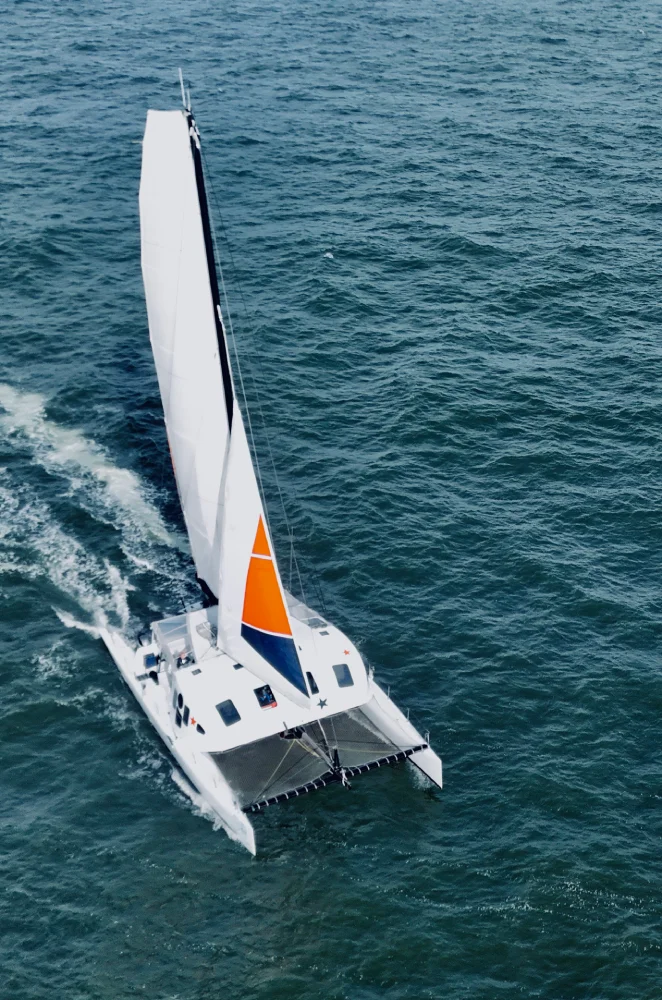
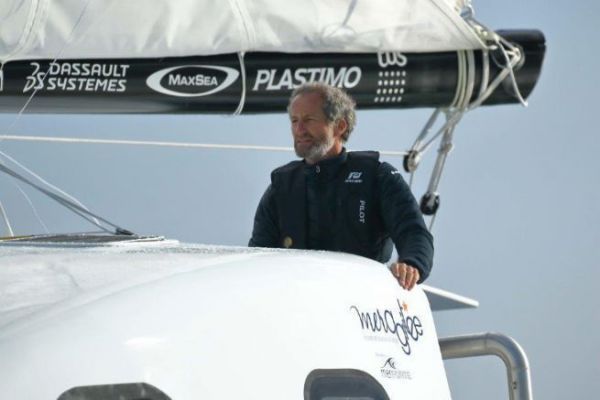
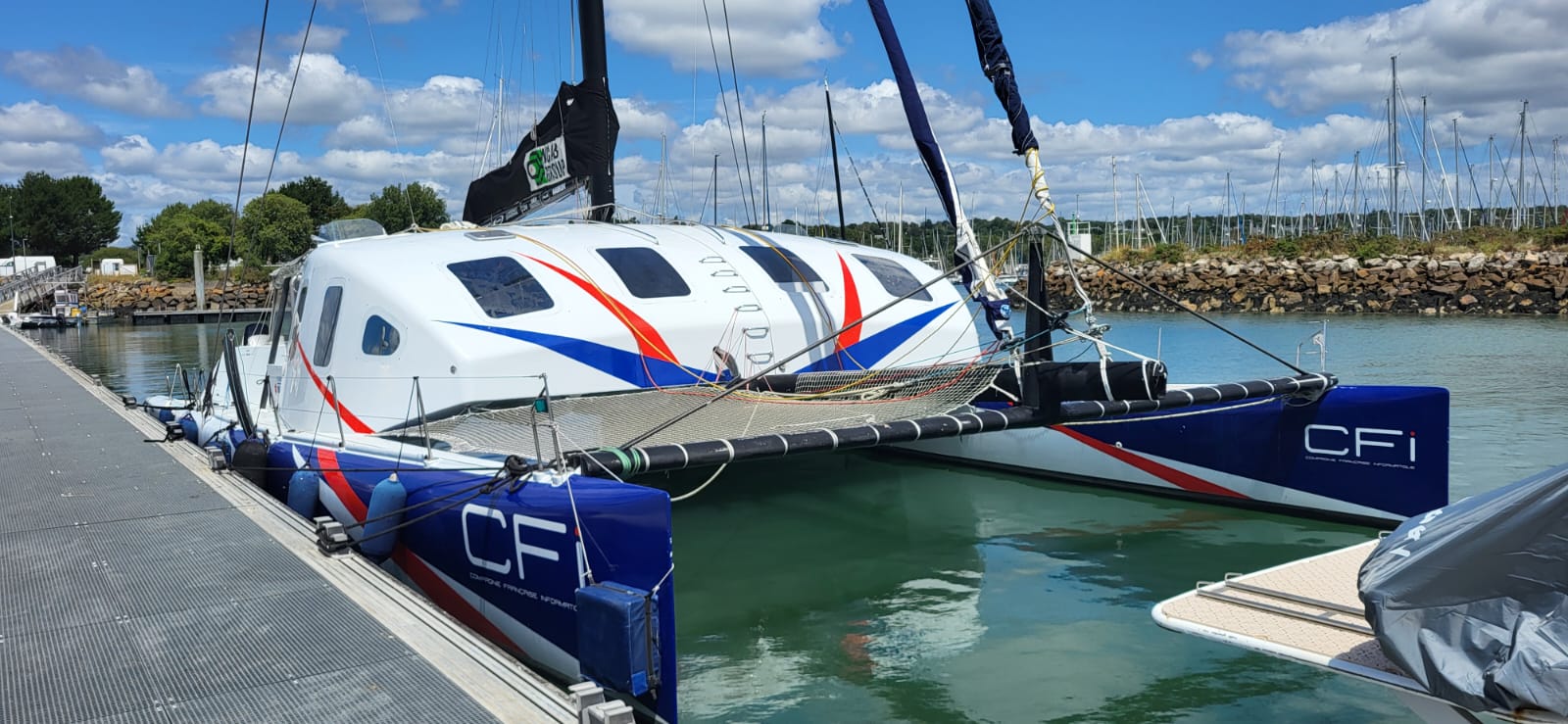
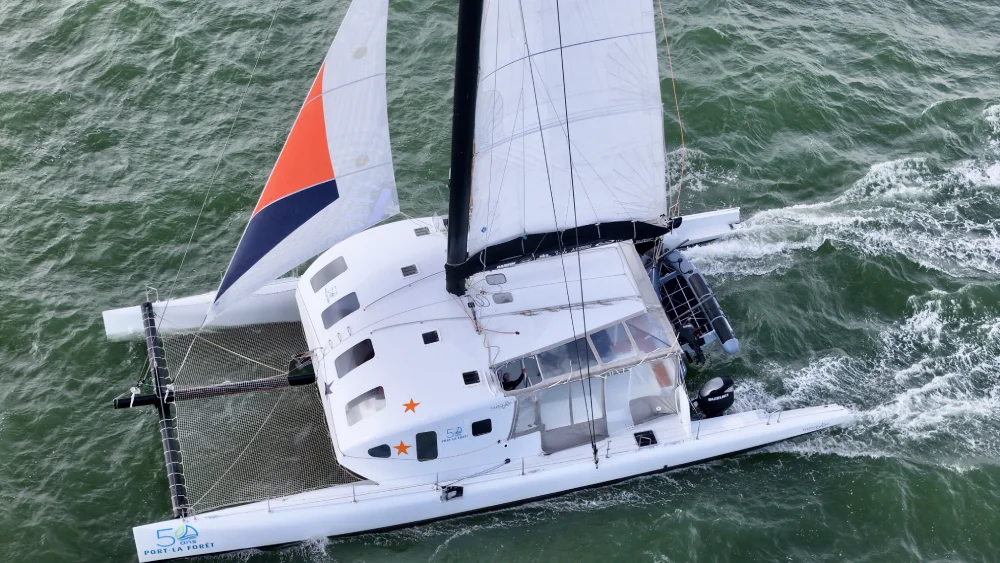
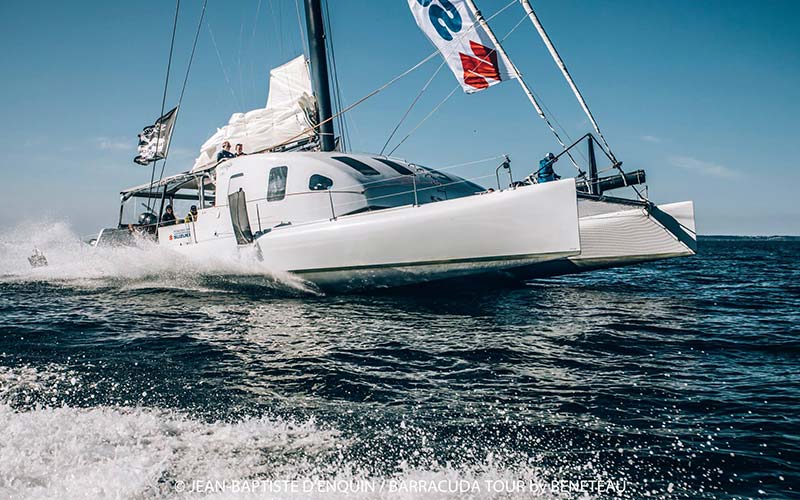
For this pilot phase, we are not sailing our usual catamaran. We are boarding Mer Agitée, the catamaran of Michel Desjoyeaux, double Vendée Globe winner, who takes the helm himself on every crossing.
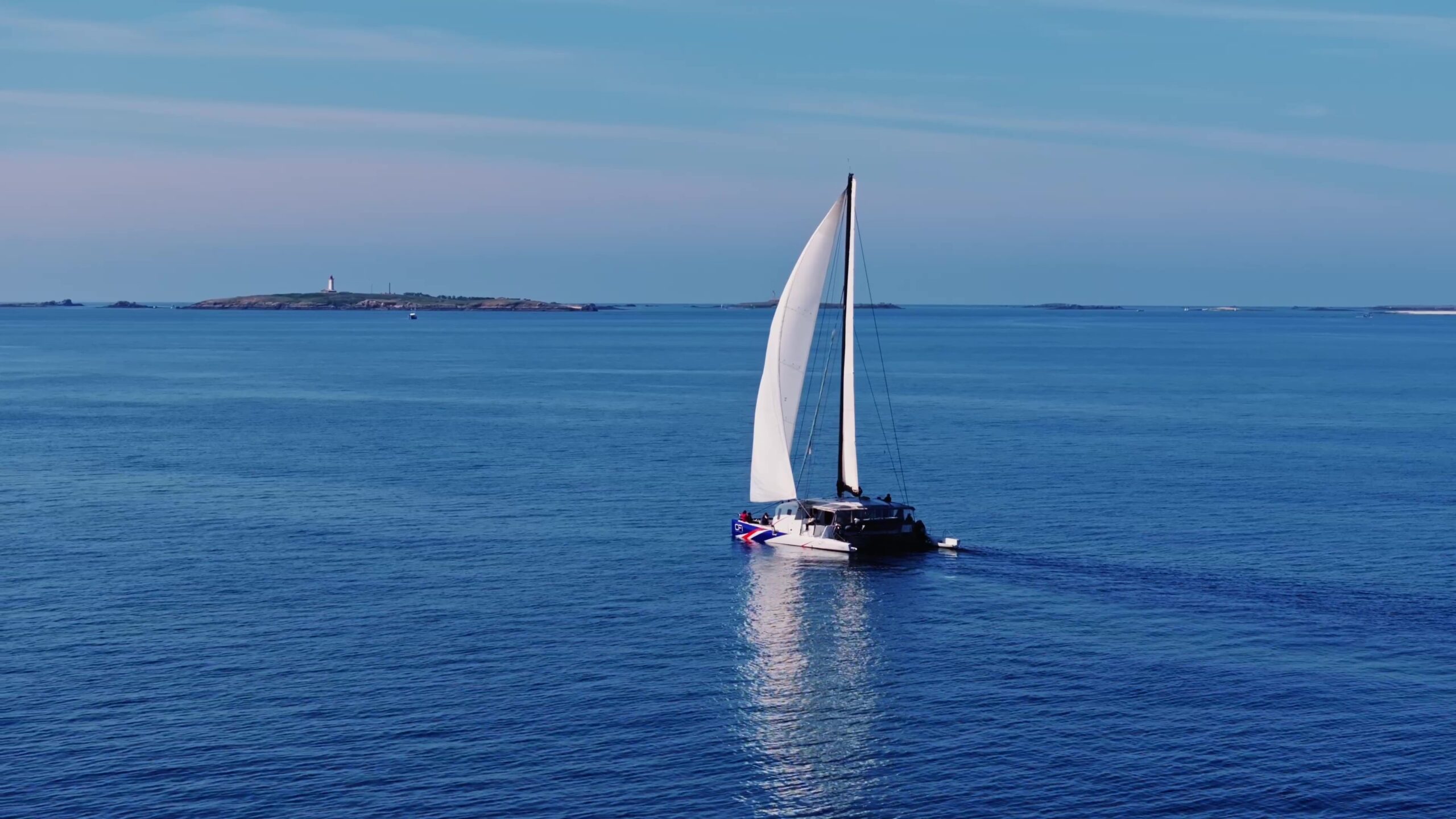
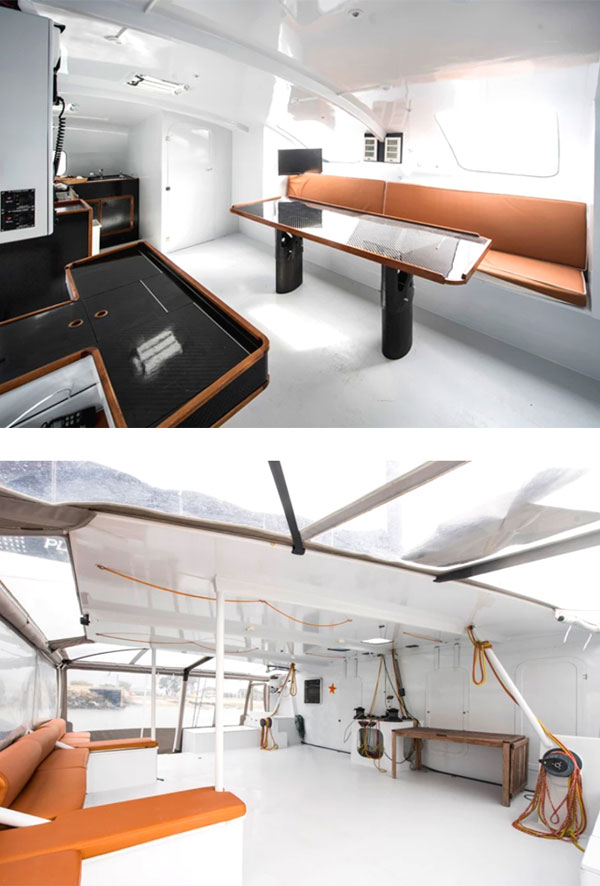
Mer Agitée is a boat in a class of its own. Built with the technology and materials of offshore racing, it carries their DNA without being a race boat: fast, but sailed at the pace of the voyage. And because it is a catamaran, it sails flat. The speed without the cold sweats, and a large sheltered cockpit to enjoy it from.
Around eight hours at sea, one coast fading behind you, another rising ahead. Offshore, the wind farms already trace the new landscape of the Channel. A setting worthy of a crossing carried by the wind.
This exact combination of boat, skipper, route and season exists for these crossings only.
 © Sam Cade / @samclikclack
Almost nothing new. Everything, a second life.
Mer Agitée did not come out of a mould. Michel Desjoyeaux assembled it, for the most part, from parts of race boats that had already sailed round the world. Each element keeps its shape and its function, for a second life at sea. That is exactly what SailLink stands for, right down to the hull: doing more with what already exists.
Reuse, not recycling. We do not melt the material down to make something else: we give a part a new life, as it is, for a new adventure. The boat that will carry you from one shore to the other is already, in itself, a small lesson in sobriety.
Built as if for racing. Sail to cross. The Channel has never looked like this.
 © Mer Agitée
 © Mer Agitée
A pilot project taken seriously.
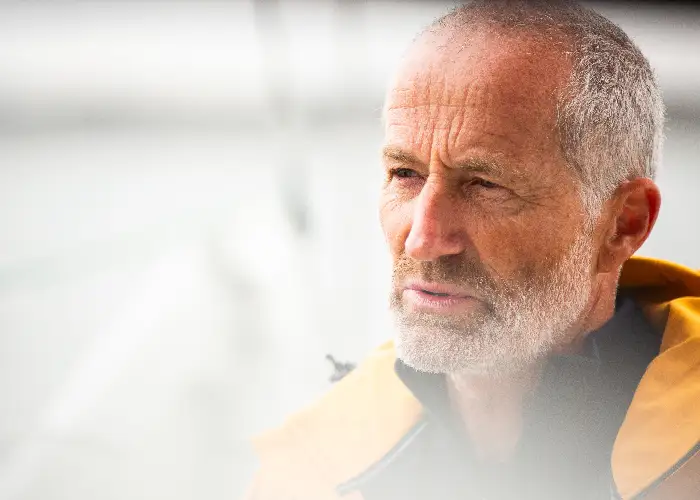
In the world of offshore racing, they call him the Professor. Michel Desjoyeaux is the only sailor in history to have won the Vendée Globe twice, the solo, non-stop race around the world. This September, he takes the helm of Mer Agitée for these crossings.
We are a small crew testing whether a second sailing corridor across the Channel can work. That a sailor of this calibre is skippering the trial says a great deal about what these crossings set out to prove. Twelve passengers per crossing, a fast catamaran, the open Channel: the rest is between you and the sea.
Two minutes aboard Mer Agitée.
Video © Mer Agitée
The schedule. Fécamp ↔ Shoreham.
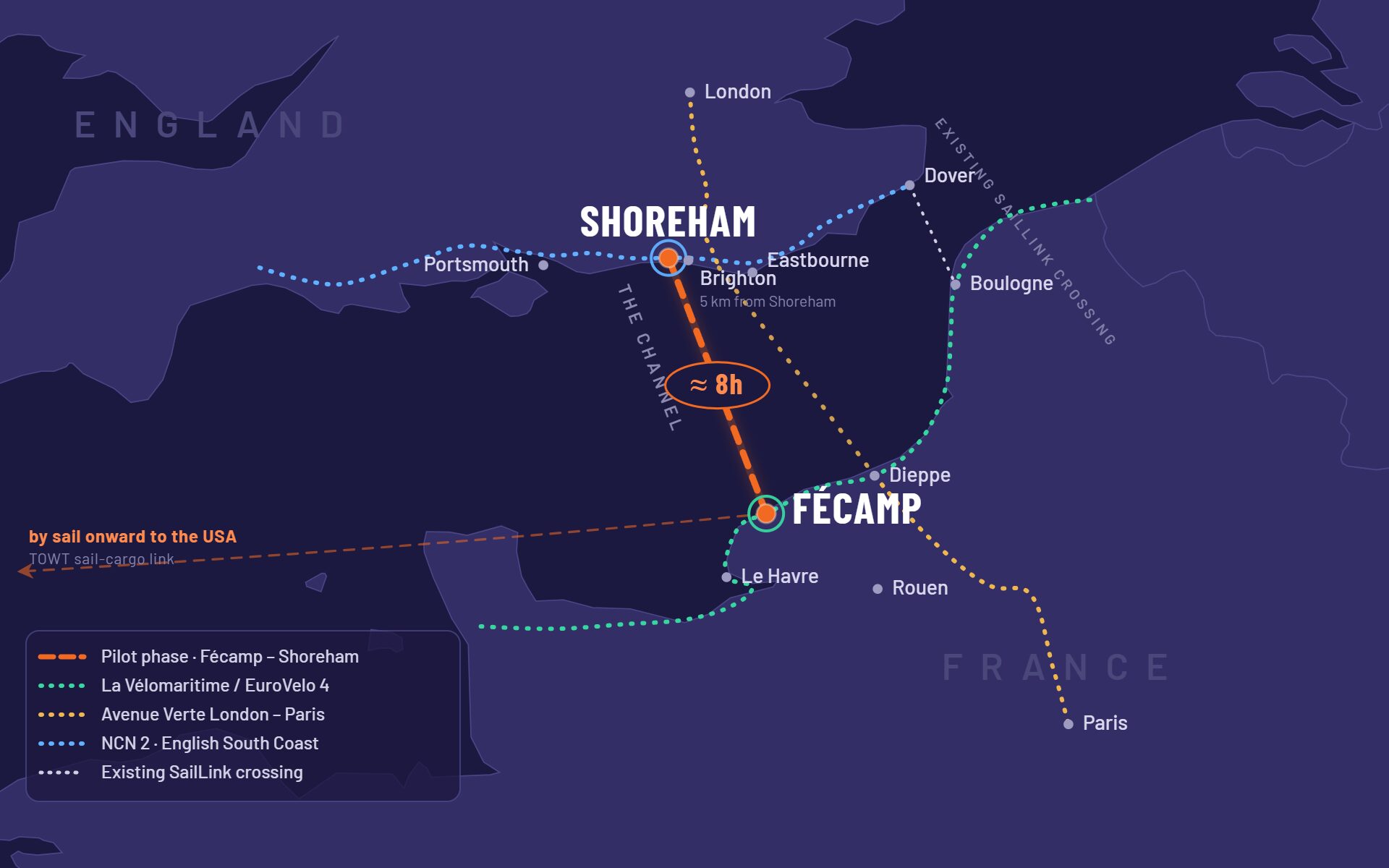
Five crossings between 8 and 13 September, alternating direction, around eight hours under sail each time, twelve places per crossing. Here is the confirmed schedule.
*All times are in the local time of each port (one hour difference between the UK and France). These departure times are indicative: some final data (swell and sea state, among others) is still being confirmed, so times may be adjusted. You will be kept informed of the exact departure time closer to the date. Expect around eight hours at sea.
Because departures leave from both ports, you can sail out and back for a weekend on either shore, or take a single crossing and carry on by bike or by rail.
 © SailLink
Not a ticket to the other shore. A day at sea.
This is not a crossing you sit through until you arrive. It is a full day of sailing offshore, the kind most people only reach on a private charter, on a boat you could not book even if you tried. Here is what a single place holds.
- Around eight hours under sail, from one coast to the other. A real offshore crossing, not a shuttle, with time to settle into the rhythm of the boat.
- Mer Agitée and her crew. Michel Desjoyeaux's racing catamaran, sailed by those who know her. A day aboard this boat is the journey, not the transport.
- Your bike inside the boat, sheltered from salt and spray, and you step ashore marina to marina, town centre to town centre. No terminal, no car deck.
- One of the first crossings of this corridor. A link that did not exist before you. You are not a passenger on a line, you are aboard the trial that might create it.
SailLink charges the same rate per nautical mile across all its lines. On Dover - Boulogne, that is £85 for 24 miles, or £3.54 a mile. Shoreham - Fécamp is 70 miles: at the usual rate, a place would be £248.
We are keeping it lower for this pilot: an invitation to be among the very first to sail this new corridor.
So your place is £220, one way, per person. The crossing is not what you pay to arrive. It is what you come for.
A weekend on either side, or a stage on the road. Your journey, your choice.
Each crossing books individually, £220 a place. Book both ways for a weekend straddling the Channel, or take a single crossing and carry on. Bikes welcome either way.
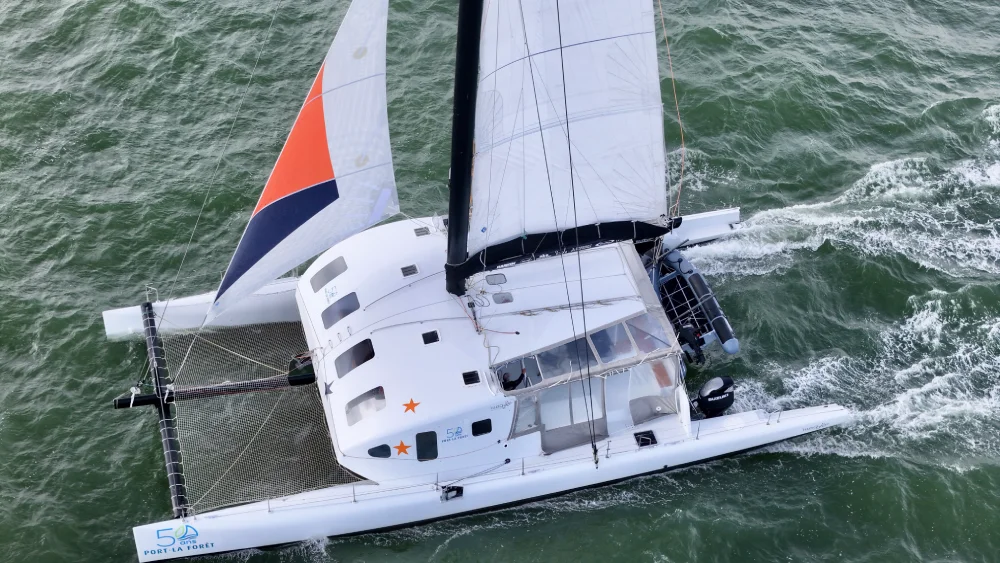 © Sam Cade / @samclikclack
Sail out, one or more nights on the other side, sail back.
- OutOne crossing, within the 8–13 Sep window
- StayA night or more on the other shoreBrighton and the Sussex coast, or Fécamp and the Alabaster Coast.
- BackA return crossing, within the same window
For those who come for the story. Two days at sea aboard Mer Agitée, Michel Desjoyeaux at the helm, a stay on the other side in between, and the sail home. The shortest of the great adventures, all under sail.
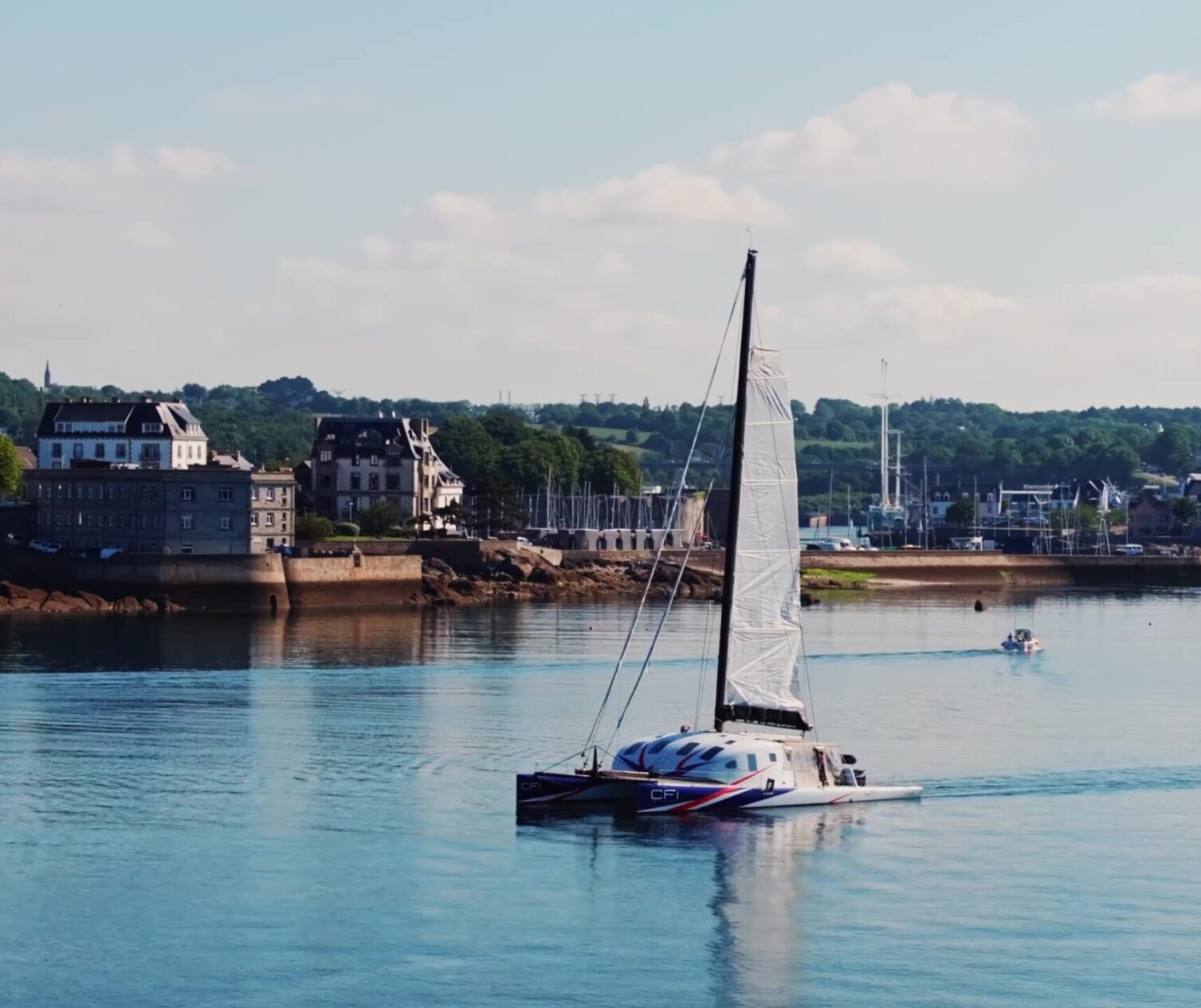 © Eneour Leost
The crossing becomes a stage of your route.
- CrossingOne crossing, within the 8–13 Sep window
- ThenRide on: the Vélomaritime, the Avenue Verte, the NCNYou step ashore at the port, straight onto the cycle network.
For those carrying on. Riding the NCN through Sussex? Coming down from London on the Avenue Verte? Swap the ferry stage for around eight hours under sail aboard Mer Agitée, your bike inside the boat, and the finest border crossing of the whole route.
Getting home another way is simple: the Newhaven - Dieppe line links the Sussex coast to Normandy all year round, less than an hour from both Shoreham and Fécamp. A sailing stage slots easily into a wider loop.
Both directions run. Crossings leave from both Shoreham and Fécamp across the window, so you can start from either shore. The confirmed day-by-day schedule is published before the on-sale on 1 August. See the French version.
Book your seat, it's live.
Tickets are on sale. One opening, the same for everyone, no hidden queue and no priority access. Capacity is limited, so book while seats remain.
Pick your date and direction below. Limited seats.
How it works on 1 August:
- Two tickets maximum per booking. So that as many people as possible can board, each booking is limited to two places.
- No resale, no transfer. The person who books travels. That is how we protect one another from speculative resale.
- Sort your travel documents before 1 August. A valid passport is required. Entry requirements depend on your nationality: non-UK nationals need a valid UK ETA (Electronic Travel Authorisation) to enter the UK, and travellers entering France should check the requirements that apply to them. An ETA is not instant, so do it now rather than on the day.
Meet Shoreham and the Sussex coast.
Most people have never heard of Shoreham-by-Sea. A few minutes of it, and you will understand why we chose it as the English shore of this pilot.
Two port towns, one weekend. All on foot.
Both Shoreham and Brighton, and Fécamp, fit into a weekend, light bag and no car. Cliffs, seafront, back streets, a good dinner facing the harbour: here is how to fill both stops, from one shore to the other.
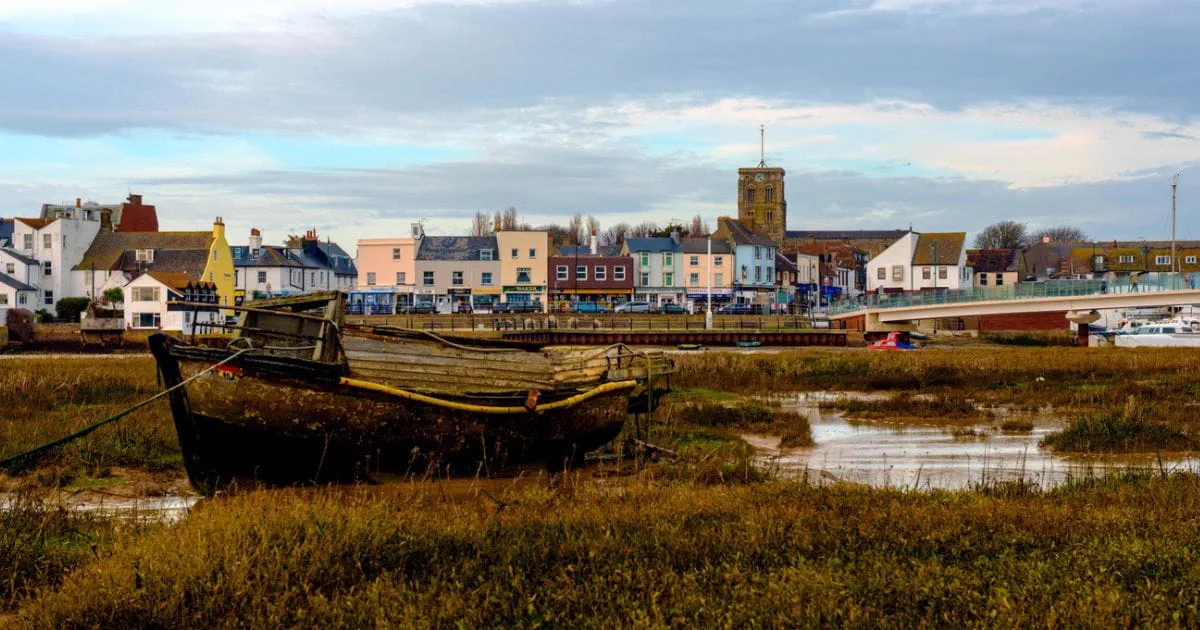 © Southern Railway
Sussex in a weekend.
You board at Shoreham-by-Sea, a historic port town at the mouth of the Adur, between Brighton and Worthing, backed by the South Downs National Park.
Places and ideas at Enjoy Shoreham-by-Sea and Visit Brighton.
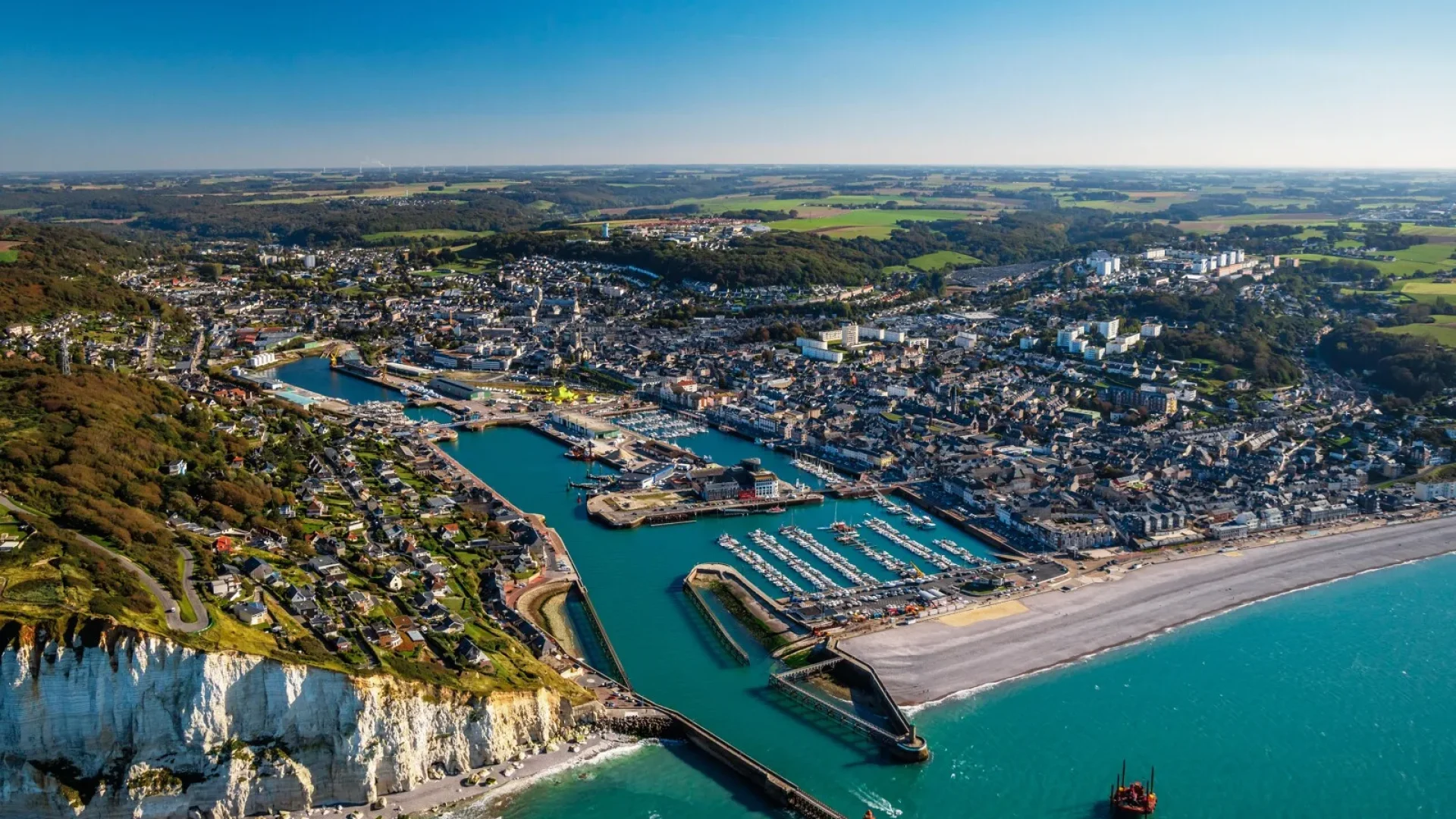 © Valentin Pacaut / The Explorers
Fécamp in a weekend.
A living fishing port at the foot of the highest chalk cliffs in Europe. Everything is walkable from the marina.
Walks, tickets and addresses at Fécamp Tourisme. Want to go further? Yport and its coloured beach huts, Étretat and its arches are a few kilometres along the coast.
Two towns that echo each other. Same chalk, same pebbles, same harbour life on both sides of the Channel. One return sail, and you will have seen them both in a weekend.
Cliffs on both sides, and everything in between.
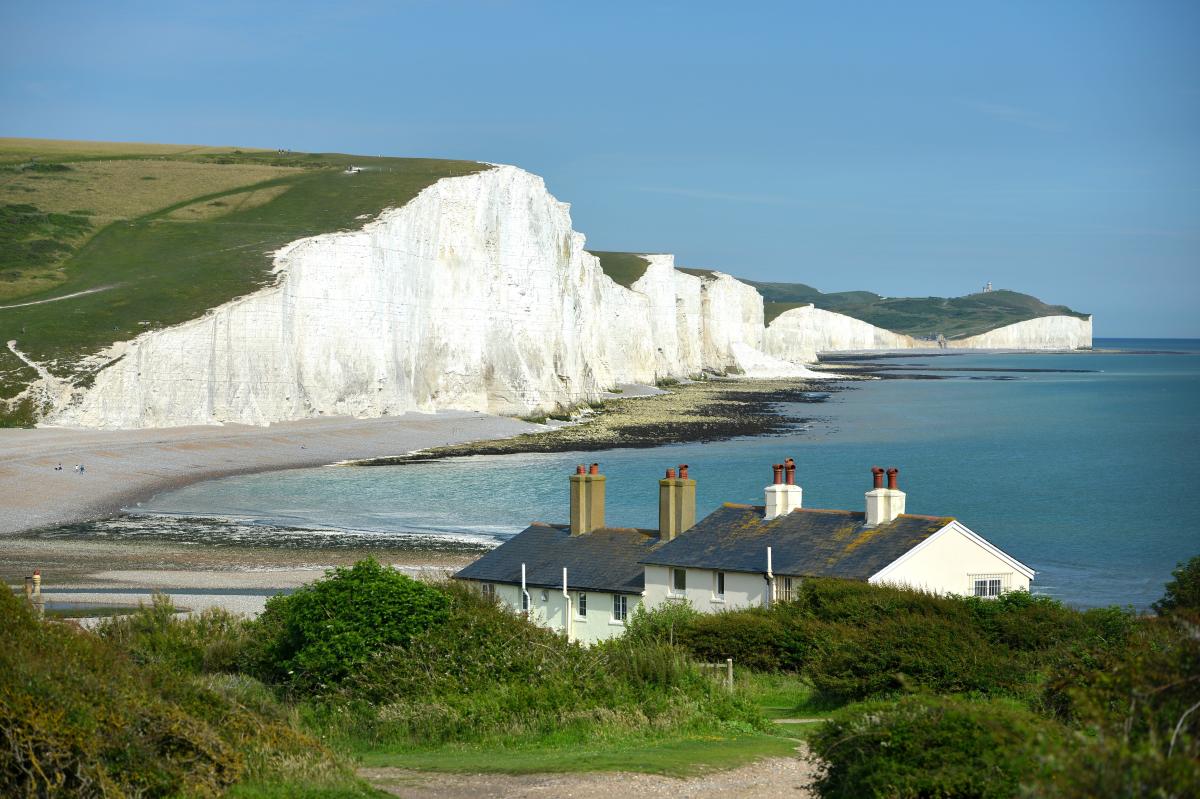
The Alabaster Coast and the Sussex coast are two halves of the same chalk, facing each other across the Channel. Fécamp stands at the foot of the highest cliffs in Europe, Sussex lines up its own opposite. This pilot links them in a single escape: you set out, you explore, you come back.
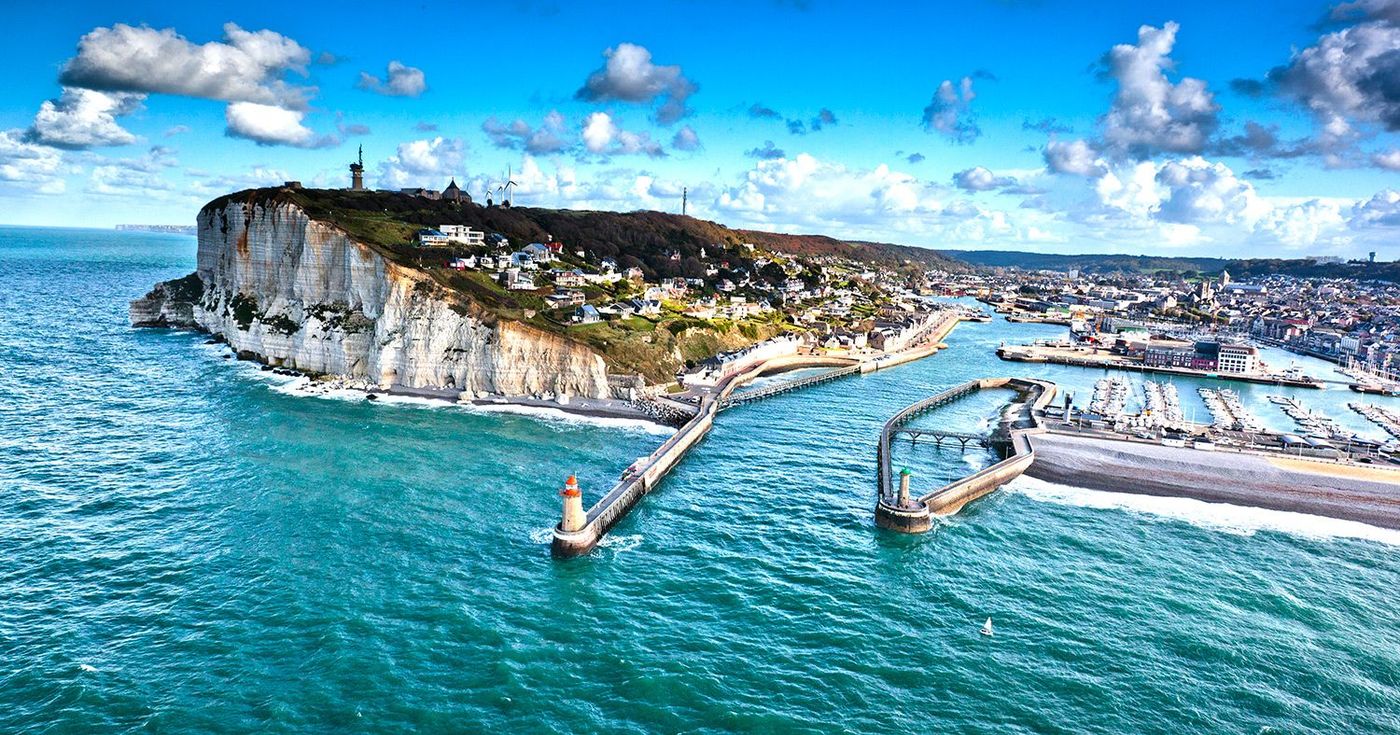 © Vincent Rustuel
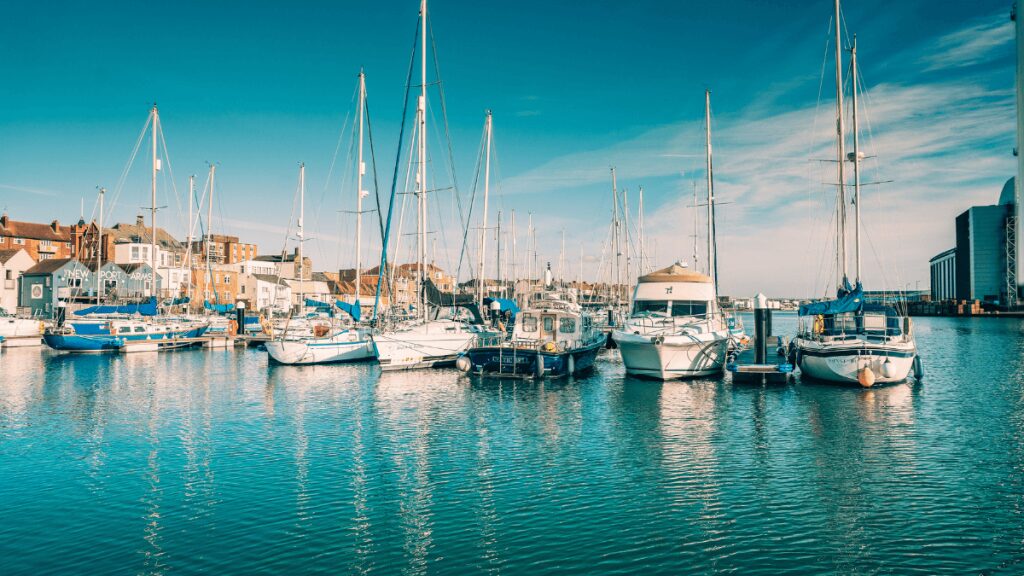 © Harbour Assist
Shoreham, the Downs and the town on the water.
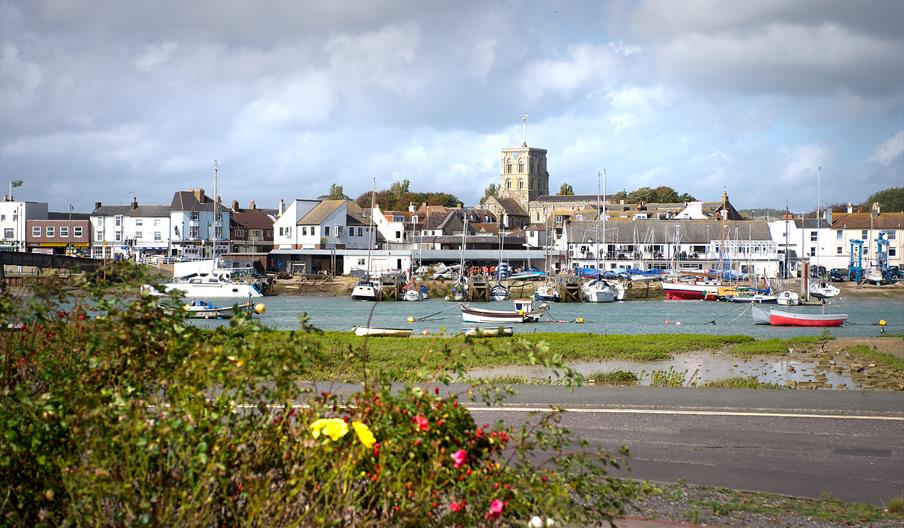 © Visit Eastbourne
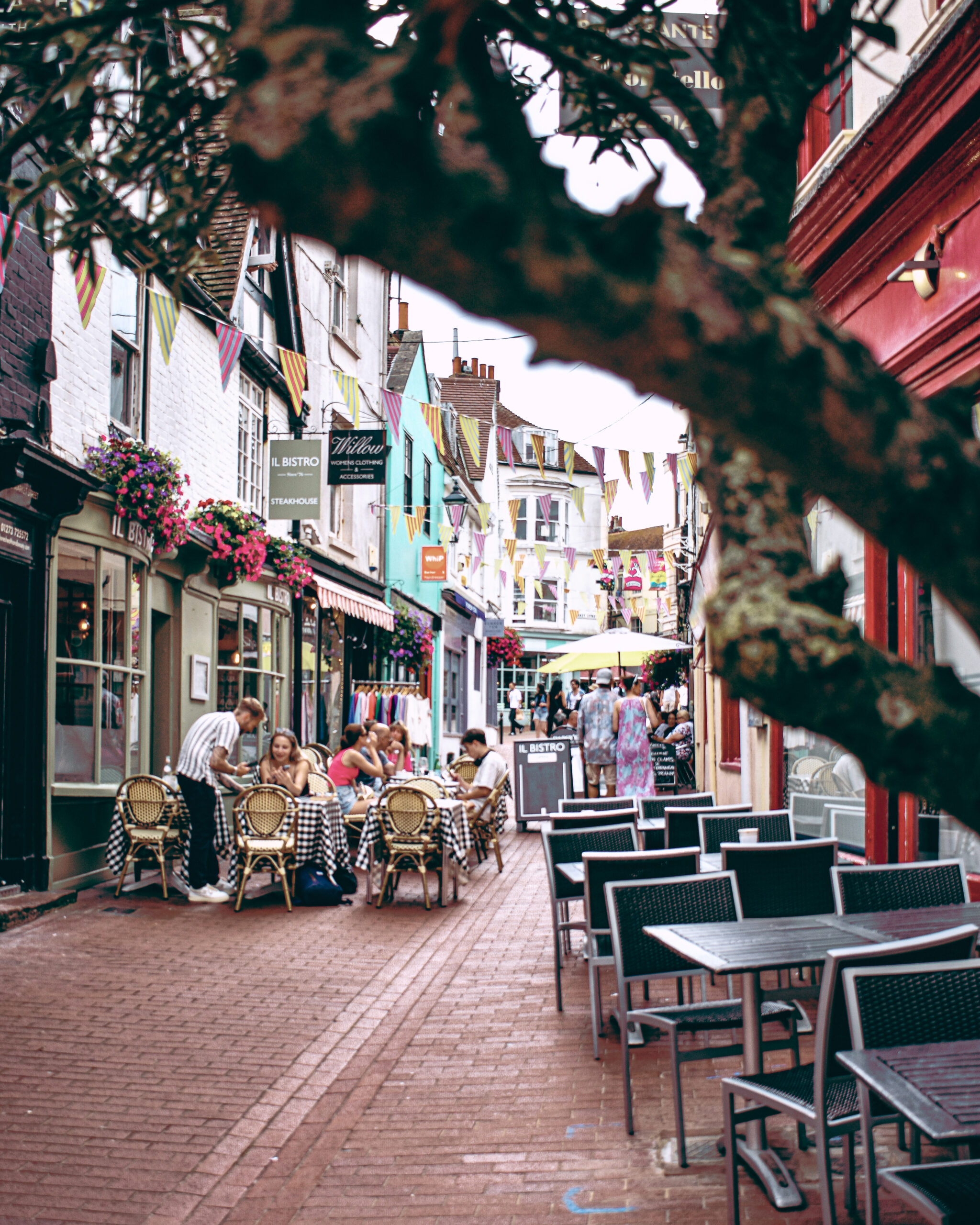 © Travel Brighton
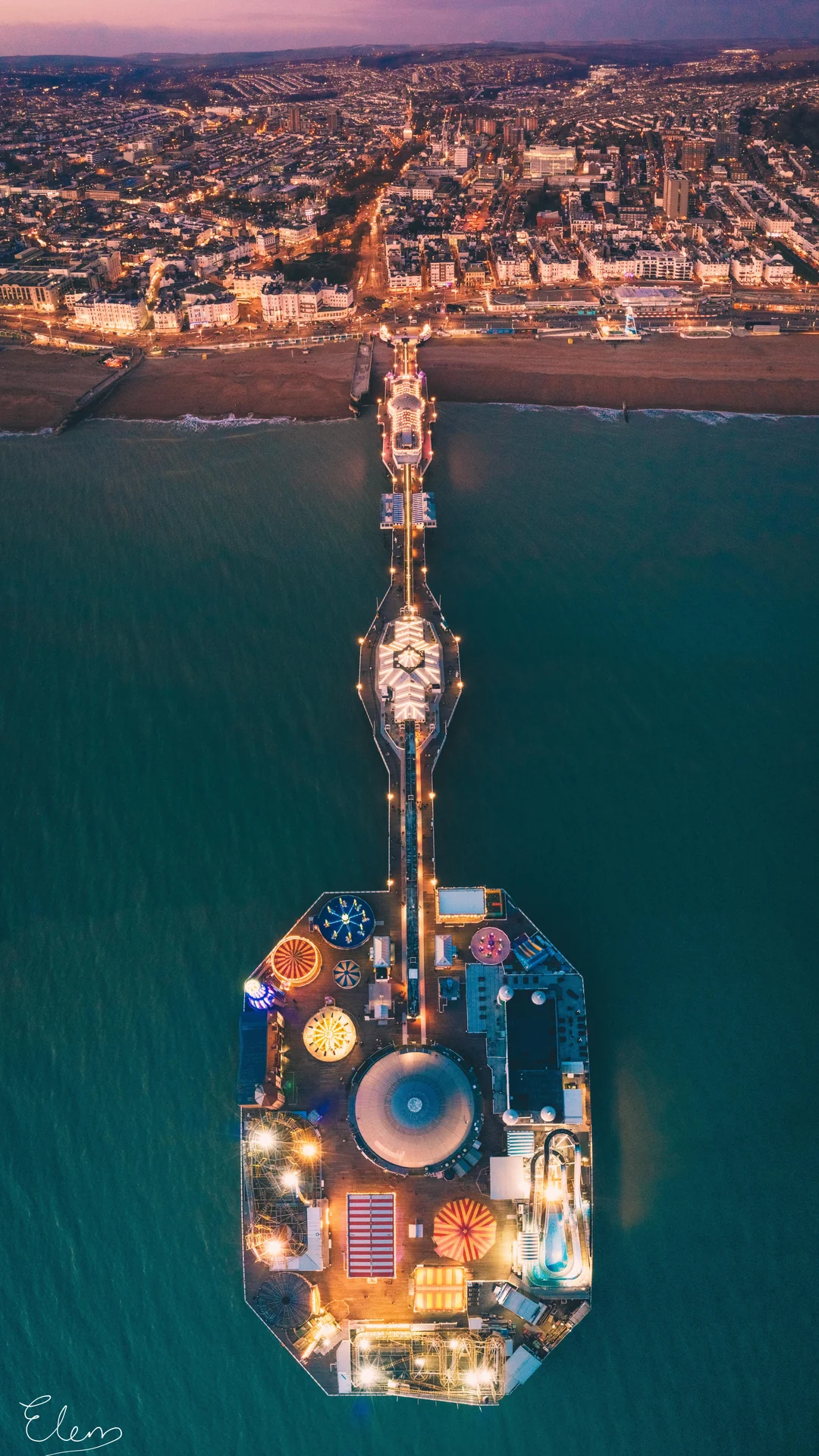
- Brighton, minutes away. The Palace Pier, the maze of shops in the Lanes, the Royal Pavilion, the pebble beach. One of the best-loved seaside towns in England, right next to the marina.
- The Marlipins Museum and St Mary de Haura. One of the oldest secular buildings in Sussex, chequerboard facade, telling the story of the port, of fishing and of cinema. Next to it, St Mary de Haura church, 11th century, known for its acoustics.
- Hollywood-on-Sea. A century ago, Shoreham beach was home to some of the first British film studios. Shoreham Airport, the oldest working airport in the UK, and its Art Deco terminal have featured in many films.
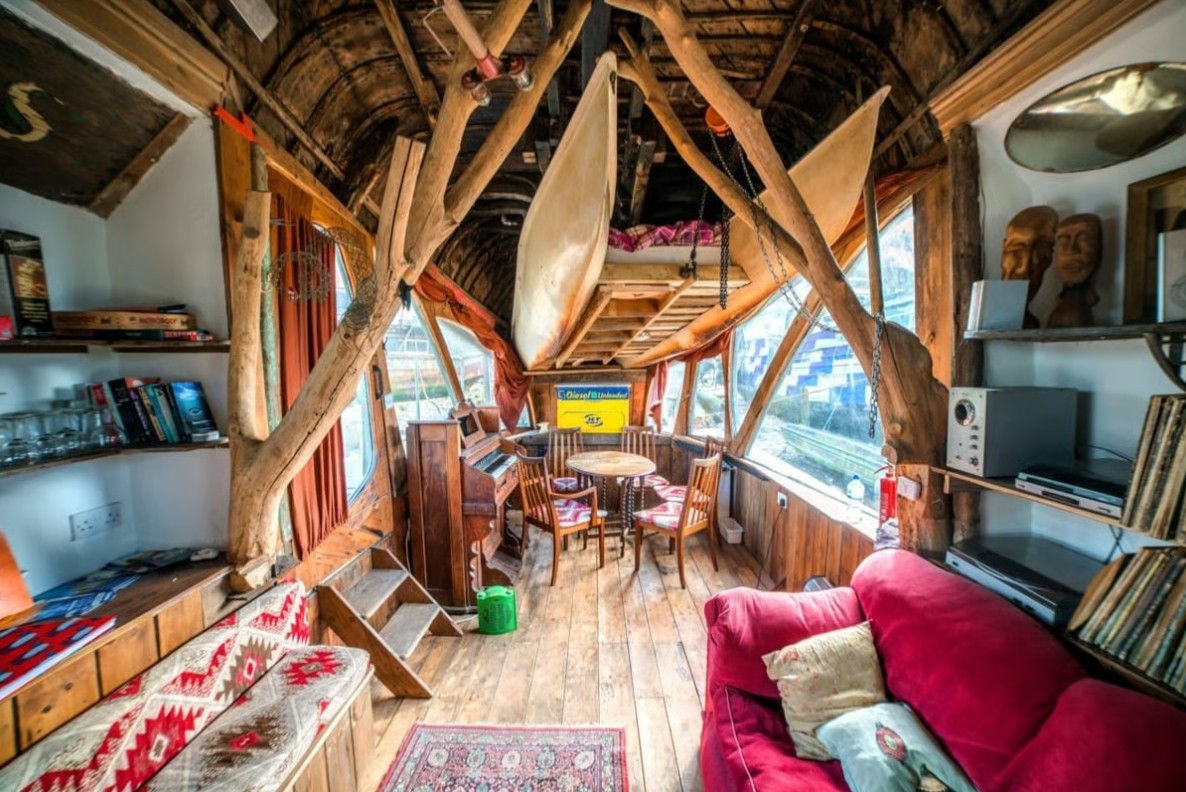
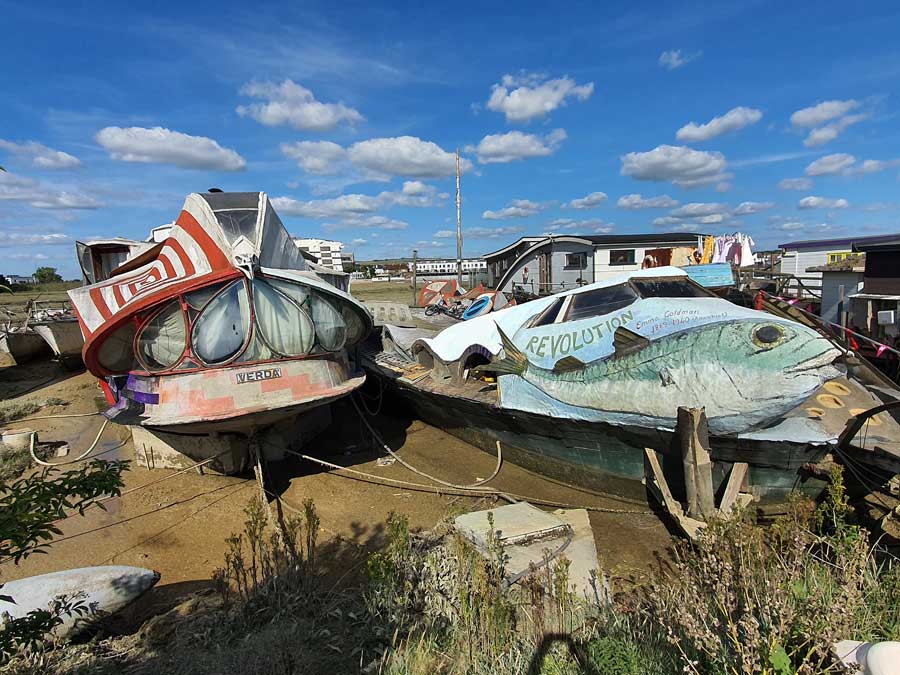
- The fort and the houseboats. Shoreham Fort (1857) guards the harbour mouth. The all-glass Adur Ferry Bridge leads to the beach and its houseboats, one of the strangest streets in England.
- The South Downs. The national park rises just behind the town: chalk hills, big skies, and the Downs Link heading off into the countryside from the Ropetackle Arts Centre.
- A real port town. Independent cafes and restaurants, regular markets, the Ropetackle arts centre, the river Adur and its waterbirds, and not a ferry terminal in sight.
Sleep on a houseboat, before or after the crossing.
The Shoreham moorings form one of the strangest and most endearing streets in England: barges, tugs, even a former minesweeper, turned into homes by artists and writers. Some can be rented by the night. Arrive the evening before, sleep on the water, then board in the morning.
© Southern Railway
 © Book a Houseboat
Fécamp, a sailors' port from the start.
 © Sabina Lorkin
© Valentin Pacaut / The Explorers
© Sabina Lorkin
© Valentin Pacaut / The Explorers
- The Newfoundlanders' port. For four centuries, the sailors of Fécamp set off under sail to fish for cod as far as Newfoundland, making the town the leading cod port in France. A sailing ferry setting off again from Fécamp is no accident: it is the port returning to its element.
- Cap Fagnet and the highest chalk cliffs in Europe. The high point of the Alabaster Coast, with the sailors' chapel Notre-Dame-du-Salut and the semaphore. The same white chalk as the Seven Sisters, opposite.
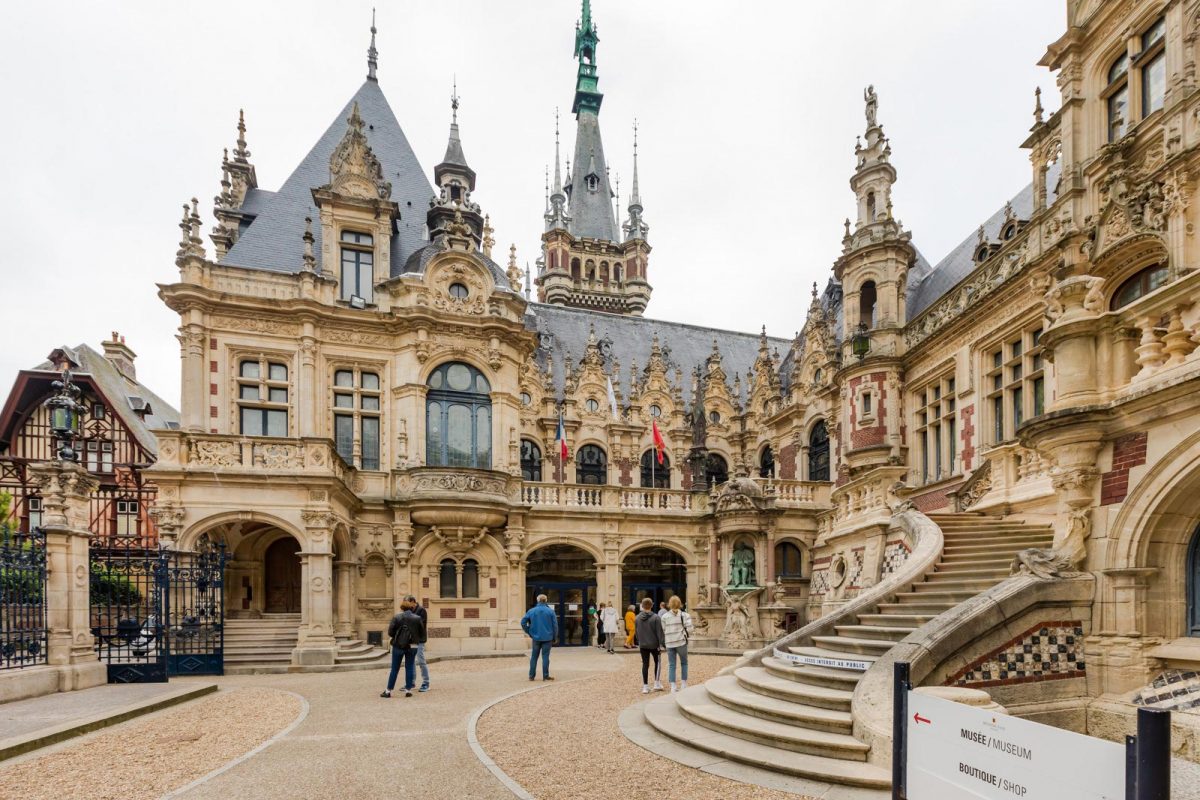
- The Palais Bénédictine. A Gothic-Renaissance palace built to distil the famous liqueur, still produced here, one of the most spectacular monuments in Normandy.
- Les Pêcheries, the Fécamp museum. On the water, in a former cod-drying loft, it tells the maritime story of the town, from cod fishing to Guy de Maupassant, a local son, with a rooftop viewpoint.
- The Abbey Church of the Holy Trinity. One of the largest Gothic buildings in Normandy, in the heart of the town, minutes from the harbour.
- A real port town. The fish market, the pebble beach in the town centre, the GR21 and the Vélomaritime leaving from the quay. You arrive in the heart of the town, not in a terminal.
 © Rolf Gabarell
The missing link of cross-Channel cycle touring.
The great European cycle routes run right up to the water, on both sides of the Channel. Then comes the break: motorway-scale terminals, lorry decks, a crossing built for cars. This pilot tests the alternative, and Fécamp sits right on the line.
Ride to the port, load your bike inside a sailing catamaran, cross under sail, ride off onto the cycle network. We believe that is what a Channel crossing by bike should look like, and these four crossings are the starting point.
- The Vélomaritime (EuroVelo 4) runs through Fécamp and along the Alabaster Coast. Head north towards Le Tréport or south towards Étretat and Le Havre the moment you step ashore.
- The Avenue Verte London - Paris passes through here: on the English side it links the Shoreham area to London, on the French side it reaches Paris from the Normandy coast. Fécamp - Shoreham slots in naturally.
- La Seine à Vélo is within reach via the coast and Le Havre, to run on towards Rouen and Paris.
- Bikes travel inside the boat, sheltered from salt and spray, £10 per bike.
See what every passenger will see.
It is a pilot. Here is exactly what that means.
SailLink is the small crew behind the first sailing ferry link between Dover and Boulogne-sur-Mer. This September, we are testing whether a second corridor can work: Fécamp to Shoreham. A pilot, to find out. We are self-funded, every ticket goes straight back into the boat and the crossings, and we never promise a future season. That is how we have always done it, and it is why we would rather tell you the details ourselves.
- It is a pilot, not yet a regular line. A short series of crossings, once for now. We do not promise what comes next, but that is exactly what this pilot is for: to show that a Normandy to Sussex sailing link can exist. What these days prove will decide the rest.
- Passport control takes place at the port, on arrival as on departure. Bring a valid passport. The exact arrangements are confirmed to you before departure.
- The wind decides the day. If we have to cancel a crossing for weather, you are refunded in full. That is the pact with the sea.
- Otherwise, the sale is final. With a small number of places in total, we cannot hold or resell a cancelled place.
- There is an engine on board, and we use it when the wind is not enough. We talk about a low impact journey, because honestly that is what it is.
- Accommodation ashore is up to you and at your own cost. We are glad to point you in the right direction, on both sides.
Everything to know before you board.
How long does the crossing take?
How does booking work, and how much does it cost?
When does booking open, and what are the rules?
Can I sail out and back?
What if there is no wind?
What happens if the crossing is cancelled?
Can I bring my bike?
How does passport control work?
Where to stay, and how to get back another way?
What is included in the price?
Can I bring my dog?
Can I join a waiting list or reserve a date in advance?
Every great crossing was once a trial. These are ours, and the twelve people aboard each one are part of the answer.
From both sides of the Channel, together.
We proved the concept between Dover and Boulogne. These crossings will tell us whether a second corridor can carry it, and Fécamp was the port that suited it best.
We are delighted to see Shoreham Port working with SailLink and the Port of Fécamp to offer this unique cross-Channel crossing experience. As global warming challenges the way we travel, wind propulsion offers a compelling alternative. This link retraces the historic voyage of Charles II, who reached Fécamp from Shoreham in 1651.
A new low impact tourist link between Sussex and Normandy is taking shape, as an alternative to the carbon-emitting ferry. Fair winds!
I welcome this pilot phase between Fécamp and Shoreham, which marks an important step towards new, more sustainable maritime mobility between the two shores of the Channel. It draws on Fécamp's maritime identity and revives the historic links between Normandy and southern England, while showcasing the tourism appeal of the Alabaster Coast.
We proved it can work. Now help us make it matter.
SailLink is a self-funded crew of three. On our own, we showed that a Channel crossing under sail can be a real passenger service. A season behind us, another under way, and this pilot to open a second corridor. That much, we have done.
What comes next is bigger than three people can carry alone. More crossings, more corridors, a genuine low impact alternative for crossing the Channel: that only becomes real with partners behind it. Sponsors do not just support SailLink, they help redraw what passenger travel by sea can be. If that is a future you want to see exist, come and build it with us.
Covering the pilot?
The full press release, visuals and boat details are available to media. For interviews write to joris@saillink.co.uk.
Photo and video credits
- Sam Cade / @samclikclack
- Eneour Leost
- Rolf Gabarell
- Mer Agitée
- Villysaufachse
- Valentin Pacaut / The Explorers
- Vincent Rustuel
- Sabina Lorkin
- Southern Railway
- Harbour Assist
- Visit Eastbourne
- Travel Brighton
- Book a Houseboat
- Rosemary and Pork Belly
- Elem
- SailLink (map)