
The finest coastal
cycling route in France.
Reachable by sail.
Dover to Boulogne in 4h30, then the whole French coast: ride south to Roscoff or north into Belgium
La Vélomaritime is one of the great cycling routes of Europe. Most British cyclists have never ridden it.
La Velomaritime (EuroVelo 4, or EV4) runs around 1,500 km from Roscoff in Brittany to Dunkirk, tracing the entire French Atlantic and Channel coastline. Saint-Malo, Mont-Saint-Michel, the D-Day beaches of Normandy, the cliffs of Étretat, Dieppe, Le Touquet, and finally the wild Opal Coast with its chalk headlands and sea views to England.
The route is the French section of EuroVelo 4, the pan-European cycling network. It is well-signed, well-resourced and thoroughly documented on lavelomaritime.fr, with GPX files and accommodation guides for every stage. Most cyclists ride the full route in 20 to 30 days. But it works just as well in sections, from Boulogne south for a week, or from Boulogne north along the Opal Coast into Belgium.
SailLink crosses from Dover to Boulogne in 4h30, under sail. From the marina at Boulogne, you can turn south towards Roscoff, or north towards Calais, the Deux-Caps cliffs, Dunkirk and Belgium. The entire route is accessible from Dover in a single sailing, your bike on board, no car deck, no dismantling.
British cyclists already know the western Channel loops, the Tour de Manche and Petit Tour de Manche, linked to France by car ferries from Plymouth and Poole. SailLink opens the eastern equivalent: a sailing crossing at Boulogne that connects the British cycle network directly to the Vélomaritime, bike on board. It is the kind of cross-Channel cycling trip that British, Belgian, Dutch and German riders have done for decades. The Vélomaritime is the French coast version, and now it is one sail from Dover.
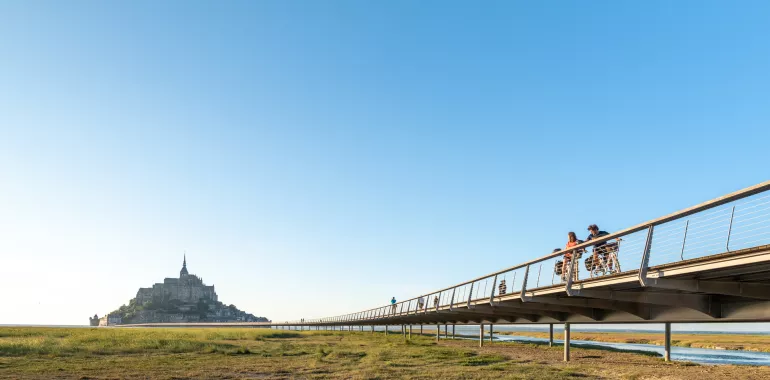 © Emmanuel Berthier / La Vélomaritime
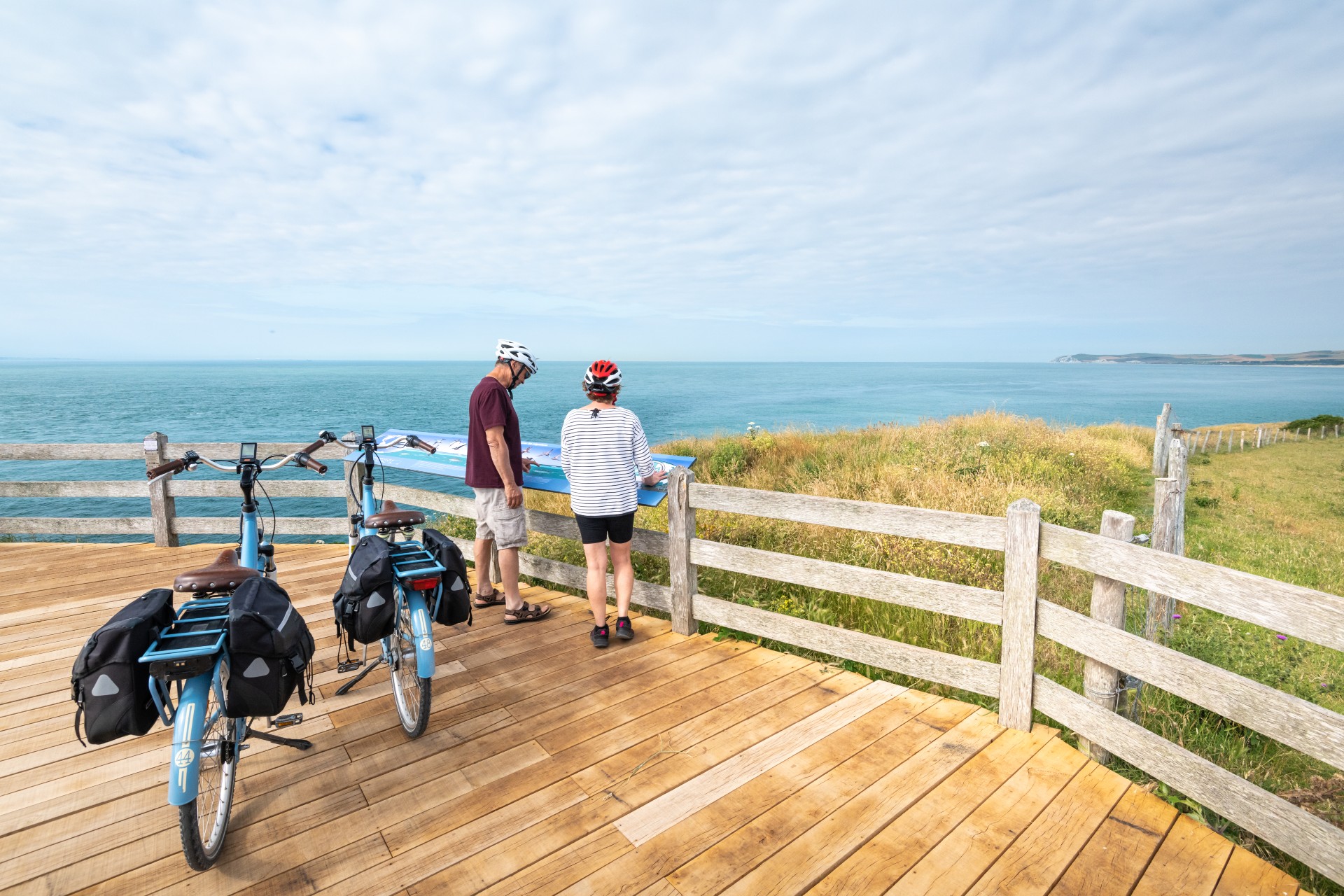 © Emmanuel Berthier / La Vélomaritime
The Vélomaritime is one of the most accessible long-distance coastal routes in Europe. The infrastructure is good, the food exceptional, the landscapes constantly changing. It is not extreme. It is the kind of trip a fit touring cyclist can plan in a weekend and ride in a fortnight.
Official route guide, lavelomaritime.comThree types of cyclists. One sail in common.
Whether you are starting from Britain, from Belgium, or from Roscoff, SailLink and the Vélomaritime connect, and the crossing runs both ways. Here is how the route works for each.
Cross the Channel first. Then ride France.
You start from Dover. SailLink takes you to Boulogne Marina in 4h30 under sail. From the marina, turn south and the Vélomaritime stretches around 1,300 km to Roscoff, through Mont-Saint-Michel, Saint-Malo, the D-Day beaches and Brittany. Or turn north and ride the Opal Coast to Belgium in a week. The crossing is the beginning of the adventure, not the logistics before it.
No need to sail back. Return from Boulogne-Ville by TER direct to Paris Nord (~2h40), then Eurostar to London St Pancras (~2h20). Bike reservation free on line K, book via SNCF Connect.
Ride the Vélomaritime south, then cross to Britain.
You are already on the right side of the Channel. Join the Vélomaritime in Belgium or Dunkirk and ride south along the Opal Coast through Calais, Cap Blanc-Nez, Cap Gris-Nez to Boulogne. At Boulogne Marina, board SailLink. 4h30 later, you are in Dover, where NCN1 begins and Britain opens up. The classic EV4 runs to Roscoff, but the SailLink crossing is a natural extension across the water.
What awaits in Britain (NCN1)~1,300 km to Boulogne. Then, the Channel.
You have cycled from Roscoff through Brittany, Normandy and the Somme. You arrive at Boulogne, one of the final stages of EV4. The official route continues to Dunkirk, but at Boulogne Marina, SailLink offers a different ending. Cross to Dover in 4h30 and continue on NCN1 north through Britain, all the way to Scotland and Shetland if you choose. The Vélomaritime does not have to end at Dunkirk.
NCN1, Dover to ScotlandThe route, region by region.
Each region has its own character. The Atlantic wildness of Brittany gives way to the market towns of Normandy, then to the Somme estuary, and finally to the Opal Coast cliffs where England is visible on clear days. And then, at Boulogne, the sea itself becomes the next stage.
The journey begins at Roscoff harbour, where ferries arrive from Plymouth and Cork. The route heads east along the Breton coast through fishing villages, granite headlands and sheltered estuaries. Pink granite cliffs, Tréguier cathedral, Paimpol. The wildest stretch of the whole route.
Saint-Malo, the walled corsair city, then south along the Rance estuary to the bay of Mont-Saint-Michel. The tidal island rising from the sands on the horizon, then closer, is one of the great cycling approaches in France.
Utah Beach, Omaha Beach, Pointe du Hoc. The route follows the Calvados coast through the D-Day landing sites, a landscape of profound historical weight. Arromanches, Bayeux, Caen. Take time here. This section should not be rushed.
The white chalk cliffs of Étretat, one of the most photographed landscapes in France. North via the Alabaster Coast to Dieppe, the historic Channel port where the Avenue Verte cycling route crosses to Newhaven. The Channel is now always present.
The vast Somme estuary at low tide, a landscape of tidal flats, salt marsh and seabirds. Le Crotoy, Saint-Valery-sur-Somme, Berck. Then the Côte d'Opale begins, and the cliffs grow taller. England appears on the horizon for the first time.
France's largest fishing port, a medieval citadel on the hill above the marina, the fish market at Quai Gambetta every morning, and the best seafood in northern France. And from Boulogne Marina, SailLink crosses to Dover. The Vélomaritime meets Britain here.
The stage that EV4 cannot officially list, but that every cyclist who reaches Boulogne is ready for. Roll on board at the marina, panniers on, and cross the English Channel under sail. Arrive Dover Marina. The British cycle network begins at the marina gate.
The British cycle network begins at the marina gate. NCN1 runs 2,034 km north to Shetland. NCN2 heads west along the south coast. London is 180 km by bike or under 1 hour by High Speed train. The Vélomaritime does not end at Dover. It continues.
NCN1, Dover to Scotland →The Vélomaritime meets the sea.
SailLink takes you across.
"Une autre manière de traverser la Manche: Douvres, Boulogne-sur-Mer à la voile avec SailLink. Une traversée de 4 à 5 heures, au rythme du vent et des marées. Capacité: 12 passagers et 12 vélos."
Source: lavelomaritime.fr, Liaisons maritimes, 202612 bike spaces per crossing. They sell out, especially in July and August. Book SailLink first, then build your itinerary around the crossing date.
Stay at Hotel Monsieur Georges or La Matelote, both minutes from the pontoon. Place Dalton fish market on Wednesday and Saturday mornings. Wake up in France, arrive in Dover by afternoon.
No car deck, no lorries, no terminal. No bagging or dismantling your bike as the Eurostar requires. You arrive at a marina on the route itself, panniers on, ready to ride.
Two steps up from the pontoon to the catamaran, roughly one metre. No lifting required beyond that. Panniers stay on throughout. Your bike is visible and secured in the cockpit.
Vélomaritime and British continuation, ready for your GPS.
Two GPX tracks. La Vélomaritime (EuroVelo 4) for the full French coast, and NCN1 for the British continuation. The SailLink sail crossing between Boulogne and Dover is the link that joins them, in either direction. Load them into Komoot, Garmin or Wahoo.
Riding the Vélomaritime from England? Take the EV4 track and cross to Boulogne with SailLink. Finishing the French coast and continuing into Britain? Add the NCN1 track and cross at Boulogne to Dover. Either way, the sail crossing between the two marinas is the link no car ferry route puts on your handlebars.
© Emmanuel Berthier / La Vélomaritime
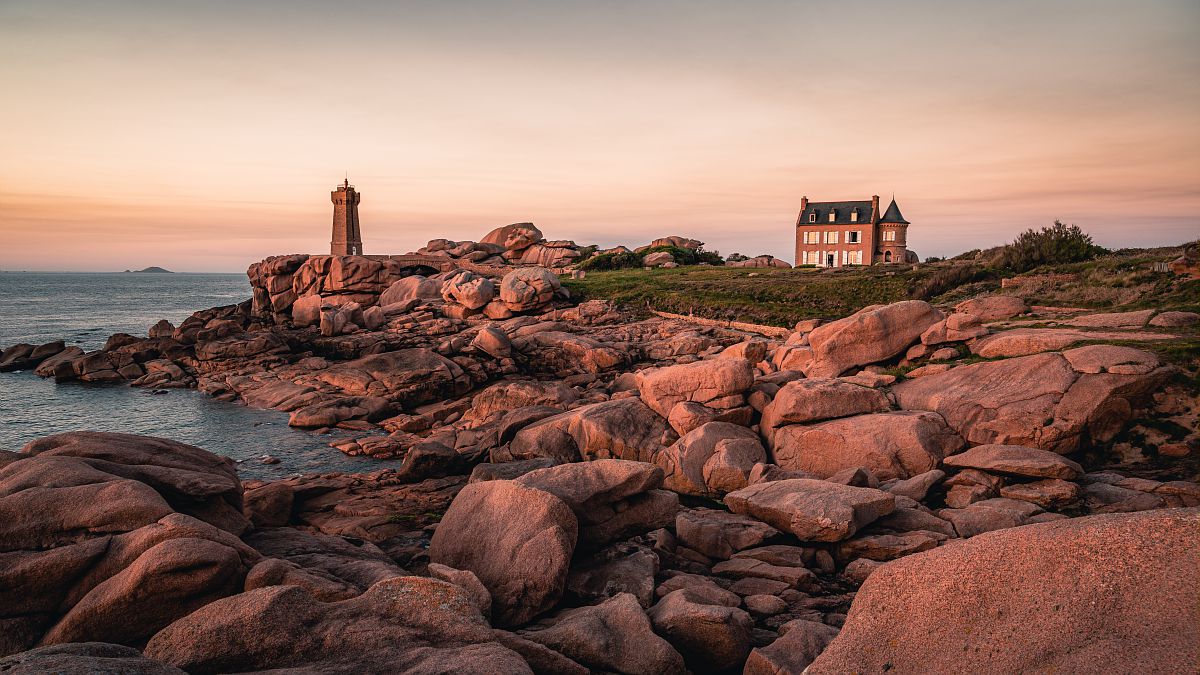 © Teddy Lezbroz / CRTB
 © V. Pacaut / The Explorers
© Emmanuel Berthier / La Vélomaritime
© V. Pacaut / The Explorers
© Emmanuel Berthier / La Vélomaritime
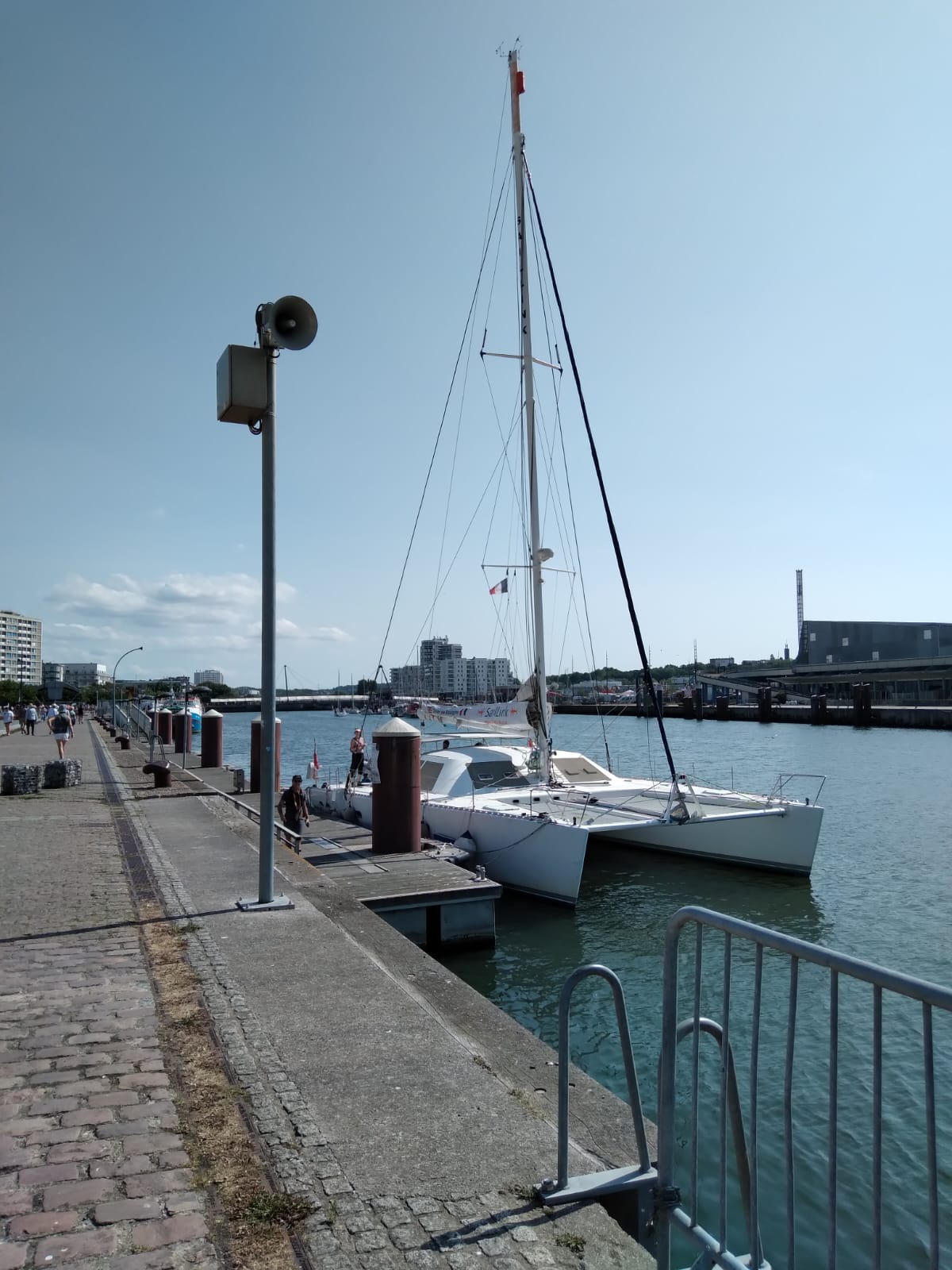 © SailLink
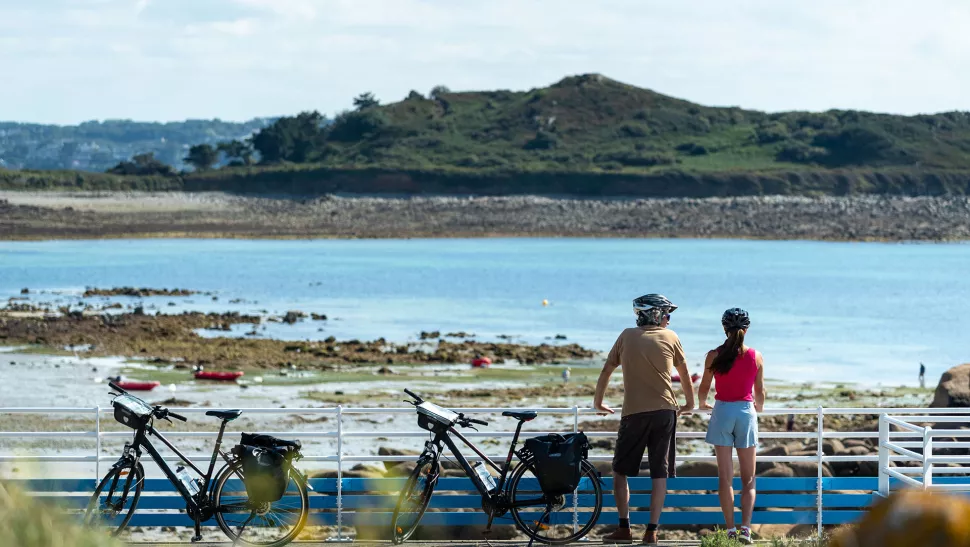 © Emmanuel Berthier / EV4
"I had cycled 1,400 km from Roscoff. Standing at Cap Gris-Nez, seeing the White Cliffs across the water, and knowing I was crossing under sail the next morning. That was the moment the whole journey made sense."
Dover is not an ending. It is a beginning.
From Dover Marina, four major cycling routes depart in different directions. SailLink connects the Vélomaritime to the entire British cycle network, and through that to EuroVelo 12, the North Sea Cycle Route that runs from Britain to Norway, Denmark, Germany and beyond.
NCN1, Dover to Scotland
National Cycle Network Route 1 begins at Dover Marina, the same pontoon where SailLink arrives. It runs 2,034 km north to Shetland, through Canterbury, London, East Anglia, the Yorkshire Coast, Northumberland, Edinburgh and the Scottish Highlands. The full length of Britain, starting here.
NCN1 guideThe North Sea Cycle Route
NCN1 is Britain's section of EuroVelo 12, the North Sea Cycle Route. EV12 connects Shetland to Bergen, Oslo, Copenhagen, Hamburg, Amsterdam and Brussels, and meets EV4 again near Dunkirk. SailLink is the channel between the two great European cycling axes.
EV12 connectionsNCN2, The South Coast Route
NCN2 heads west from Dover along the English south coast through Folkestone, Hastings, Brighton and Worthing to Bournemouth and beyond. The Seven Sisters chalk cliffs, the South Downs, the New Forest. A natural alternative for cyclists heading west rather than north.
Explore cycling routesLondon in a day
Dover to London is around 180 km by bike via NCN1 and the Chalk and Channel Way, 2 to 3 days at a comfortable pace. Or take the High Speed train from Dover Priory to St Pancras in under 1 hour, bikes accepted free outside peak hours.
Paris to London guideA first stop worthy of the journey
The first day's cycling from Dover leads to Canterbury, one of England's great medieval cities. The cathedral is a UNESCO World Heritage Site, the old city compact and welcoming, the accommodation plentiful. An ideal first night after the crossing.
Discover DoverBritain begins dramatically
Arriving by sail, the White Cliffs of Dover are the first sight of Britain. The same chalk as Cap Blanc-Nez in France, separated by 33 km of sea. The coastal walk from the marina to the cliff tops is 20 minutes on foot. The view back across the Channel, to where you cycled from, is the best way to understand what you have done.
Dover guideThe most dramatic section of the whole route.
The stretch of EV4 between Le Touquet and Dunkirk, known as the Côte d'Opale, is widely regarded as the finest cycling landscape on the entire Vélomaritime. Chalk cliffs, dune systems, the two great caps, and the Channel always present.
Plan at least two days here. The stage from Boulogne to Calais via Cap Gris-Nez and Cap Blanc-Nez is around 51 km of the most memorable cycling in France. Do not rush it to catch a ferry. Take SailLink the next day instead.
For cyclists completing EV4 towards Dunkirk, the Calais to Gravelines stage continues east through the dunes before crossing into Belgium and joining the North Sea Cycle Route towards Amsterdam and beyond. The Vélomaritime does not end at Dunkirk. It continues.
Explore the Opal CoastCap Gris-Nez
The closest point in France to England, 33 km from the British coast. On clear days, the White Cliffs of Dover are fully visible. The same chalk formation, separated by the sea. The most emotionally charged kilometre on the entire Vélomaritime.
Cap Blanc-Nez
A 130-metre chalk headland above the Bay of Wissant. The Dover Patrol Memorial stands at the top, commemorating those who kept the Channel open in the First World War. One of the great viewpoints of northern France.
Dunes de la Slack
A signed detour from EV4 through wild dune and pine forest in the Parc Naturel Régional. A landscape unlike anything else on the route, and worth every metre of deviation.
The night before the crossing
France's largest fishing port, a medieval old town, Nausicaá aquarium, Place Dalton market on Wednesday and Saturday. Arrive the afternoon before, stay the night, cross the next morning. This is the right way to do it.
Plan your crossing and your route.
Book SailLink before you leave home
12 bike spaces per crossing, allocated at booking only. They sell out in summer. Standard bike £10, large bicycle £15 (cargo bikes, tandems, trailers). Add your bike directly when booking at saillink.co.uk.
Boarding at Boulogne Marina
EV4 passes through the marina district. The SailLink pontoon is metres from the cycle route. Two steps up onto the catamaran, roughly one metre. Panniers stay on, nothing to dismantle. Your bike is secured in the cockpit throughout.
Arriving at Dover
NCN1 begins at Dover Marina gate, exactly where SailLink arrives. Canterbury is 27 km north. London is 1 hour by High Speed train from Dover Priory to St Pancras, bikes accepted free outside peak hours.
Getting to Boulogne from Paris
TGV via Lille to Paris Nord, around 2h20. TER direct, around 2h40. Bike reservation mandatory on line K since July 2025, free via SNCF Connect. Boulogne-Ville station is 10 minutes by bike from the marina.
Returning to Britain without a second crossing
From Boulogne-Ville, TER to Paris Nord (~2h40, free bike reservation), then Eurostar to London St Pancras (~2h20). A one-way sailing adventure with a straightforward train return. No second crossing required.
EV4 route surface
The northern section mixes cycle paths, shared rural roads and some provisional sections. A touring or gravel bike is ideal. The Boulogne to Calais stage involves climbing around the Deux-Caps. Road bikes are manageable on the main route.
Season
SailLink operates April to October, covering the full Vélomaritime season. Late April, May, June and September offer the finest light on the Opal Coast and the fewest crowds on the route.
Cycling the Vélomaritime, answered.
How do I cross the Channel by bike to ride the Vélomaritime?
SailLink crosses between Dover Marina and Boulogne Marina under sail in around 4h30. Boulogne is on the Vélomaritime (EuroVelo 4), so you roll off the boat directly onto the route. Your loaded bike travels on board, no dismantling, no car deck, no terminal queue. It works in both directions: cross from Dover to start riding the French coast, or finish the Vélomaritime at Boulogne and cross to Britain.
Can I take my bike on a ferry from Dover to Boulogne?
Yes. SailLink is a sailing ferry built for cyclists, running between Dover and Boulogne-sur-Mer. Up to 12 bikes per crossing travel inside the boat, secured in the cockpit, panniers left on, nothing to dismantle. Add your bike when booking. Because spaces are limited to 12, book the crossing first and plan the route around it.
What is La Vélomaritime (EuroVelo 4)?
La Vélomaritime is the French section of EuroVelo 4, a coastal cycle route of around 1,500 km from Roscoff in Brittany to Dunkirk on the Belgian border. It passes the Pink Granite Coast, Mont-Saint-Michel, the D-Day landing beaches, the cliffs of Étretat, the Bay of the Somme and the Opal Coast. Boulogne-sur-Mer is one of its final stages, and the point where SailLink crosses the Channel to Britain.
How long is the Vélomaritime and how long does it take to cycle?
The full Vélomaritime is around 1,500 km, and most cyclists ride it in 20 to 30 days at a touring pace. It also works in sections: from Boulogne south towards Roscoff (about 1,300 km), or from Boulogne north along the Opal Coast to Dunkirk and Belgium. SailLink gives you a sailing crossing at Boulogne whichever section you choose.
Can I cycle from England to the French coast without a car ferry or flying?
Yes. SailLink is a sailing crossing between Dover and Boulogne, with no car deck and no flight involved. Unlike a car ferry, you arrive at a marina on the cycle route itself; unlike the Eurostar, there is no need to bag or dismantle your bike. It is the most direct low-impact way for a British cyclist to reach the Vélomaritime, and for a continental cyclist to continue into Britain.
Can I ride the Vélomaritime in either direction, and does SailLink cross both ways?
Yes. The Vélomaritime is fully signposted in both directions, and SailLink crosses both ways between Dover and Boulogne. You can start from Britain and cross to ride the French coast, ride up from Roscoff and cross to Britain at the end, or join from Belgium and Dunkirk heading south. Whichever way you go, the SailLink crossing extends the ride across the Channel rather than ending it.
How do I get back to Britain after riding the Vélomaritime?
You can cross back with SailLink from Boulogne to Dover, or take the train: TER from Boulogne-Ville to Paris Nord (around 2h40), then Eurostar to London St Pancras (around 2h20). Bike reservation on the French TER is free, booked via SNCF Connect. Many riders sail one way and return by train.